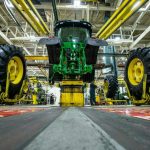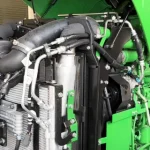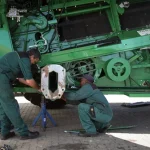


John Deere tractors have earned a global reputation for durability, engineering precision, and long service life. However, modern John Deere machines are no longer purely mechanical workhorses. Over the past two decades, they have evolved into highly integrated systems that combine advanced diesel engines, electronically controlled transmissions, high-pressure hydraulics, emissions aftertreatment, and proprietary software.
- Why Some John Deere Repairs Are Not Suitable for DIY
- Internal Engine Repairs You Should Not Do Yourself
- Transmission and PowerShift Repairs
- Major Hydraulic System Repairs and Overhauls
- Electronic Control Units and Software-Based Repairs
- Emissions and Aftertreatment System Repairs
- Steering, Braking, and Safety-Critical Systems
- Repairs That Require John Deere Dealer Tools or Authorization
- Repairs That Appear Simple but Often Go Wrong
- What Repairs Can You Safely Do Yourself?
- Warranty, Legal, and Right-to-Repair Considerations
- Conclusion: Knowing the Limits Protects Your Tractor
Because of this evolution, a common question among owners and operators is: what repairs can’t you do on John Deere tractors? The answer is not about skill alone. Many repairs are restricted due to safety risks, software locks, regulatory requirements, or the need for dealer-only tools and calibrations.
This article explains which John Deere repairs should not be attempted as DIY work, why those limitations exist, and how to recognize when professional service is not just recommended—but necessary.
Why Some John Deere Repairs Are Not Suitable for DIY
The main reason certain John Deere repairs are off-limits is system integration. In modern tractors, mechanical components no longer operate independently. A repair to one system often requires electronic calibration, software pairing, or hydraulic pressure adjustment that affects the entire machine.
Another major factor is risk concentration. A failed belt or hose may cause inconvenience. A misadjusted transmission clutch or hydraulic valve can destroy components worth tens of thousands of dollars within minutes. John Deere designs many systems assuming access to factory procedures, calibrated tools, and controlled environments.
Finally, there are legal and compliance issues, particularly with emissions systems. Some repairs are restricted not because they are technically impossible, but because performing them without proper authorization may violate emissions laws or void warranties.
Internal Engine Repairs You Should Not Do Yourself
Internal engine repairs represent the clearest boundary between owner maintenance and professional service on John Deere tractors.
While routine items such as oil changes, filters, belts, and external components are manageable, internal engine work is a different category entirely. This includes crankshafts, bearings, pistons, cylinder liners, camshafts, and valve train geometry.
John Deere diesel engines operate under extremely tight tolerances. Clearances are measured in microns, and thermal expansion is calculated into the design. Improper torque sequencing, incorrect bearing clearance, or slight contamination during assembly can result in oil pressure loss, overheating, or catastrophic engine failure.
Modern John Deere engines also require post-repair procedures such as injector coding, fuel system priming routines, and in some cases software-controlled break-in logic. Without these steps, even a mechanically correct repair can lead to long-term damage.
For these reasons, internal engine rebuilding is not considered a realistic or safe DIY repair on John Deere tractors.
Transmission and PowerShift Repairs
John Deere transmissions are among the most complex systems on any agricultural tractor. PowerShift, IVT, and CVT transmissions are not simply mechanical gearboxes; they are electro-hydraulic systems controlled by software.
Repairs such as clutch pack replacement, internal hydraulic module servicing, or transmission rebuilding should not be attempted without factory support. These transmissions require precise hydraulic pressure balancing and software calibration after assembly.
Even if the mechanical repair is successful, the tractor will not operate correctly until the transmission control unit performs learning and calibration routines. These routines require John Deere’s proprietary Service ADVISOR software and often dealer authorization.
Improperly calibrated transmissions may exhibit harsh shifting, slipping, overheating, or complete loss of drive. In many cases, damage occurs silently before symptoms become obvious—making failed DIY attempts especially costly.
Major Hydraulic System Repairs and Overhauls
John Deere hydraulic systems power steering, implements, loaders, transmissions, and braking systems. They operate at extremely high pressures and rely on precise flow control.
While replacing hoses or external fittings is generally acceptable, internal hydraulic repairs such as pump rebuilding, load-sensing valve adjustments, or SCV internal work should not be attempted without specialized tools.
Hydraulic contamination is a critical issue. Microscopic debris introduced during a repair can destroy pumps, score valve surfaces, and cause cascading failures throughout the system. Diagnosing hydraulic problems also requires flow meters, pressure testing equipment, and system schematics that go far beyond basic tools.
Incorrect pressure settings or misdiagnosed faults often result in replacing the wrong components—turning a manageable issue into a full system failure.
Electronic Control Units and Software-Based Repairs
Electronics are now central to how John Deere tractors operate. Engine performance, transmission behavior, hydraulics, emissions, and even steering rely on electronic control units communicating over internal networks.
Replacing or repairing ECUs is not a DIY task. Many modules are locked and require pairing or initialization using authorized software. Without proper access, a new controller may remain nonfunctional even if installed correctly.
Sensor replacement also frequently requires calibration. Throttle position sensors, pressure sensors, and position encoders often need software-based learning procedures. Without these, the tractor may enter limp mode, display persistent fault codes, or disable critical functions.
This dependence on software is one of the most common reasons modern John Deere repairs require dealer involvement.
Emissions and Aftertreatment System Repairs
Emissions systems are among the most restricted repair areas on John Deere tractors.
These systems include diesel particulate filters (DPF), selective catalytic reduction (SCR), DEF injection systems, EGR valves, and associated sensors. Many components require electronic resets, forced regeneration procedures, or compliance verification after replacement.
In many regions, performing emissions-related repairs without proper certification may violate environmental regulations. In addition, emissions components often require software acknowledgment before the tractor will resume normal operation.
Attempting to bypass or modify emissions systems can result in permanent fault codes, reduced power, legal penalties, or tractor shutdown. As a result, emissions system repairs are effectively dealer-only for most owners.
Steering, Braking, and Safety-Critical Systems
Steering and braking systems are directly linked to operator safety. On John Deere tractors, these systems are often integrated with hydraulics and electronic monitoring.
Repairs involving hydrostatic steering units, brake valve blocks, or safety sensors should not be attempted without professional support. Incorrect repairs can lead to delayed steering response, loss of braking efficiency, or unpredictable behavior under load.
From a liability perspective, these systems are treated differently than convenience components. Improper repairs can expose operators to serious injury and owners to legal risk.
Repairs That Require John Deere Dealer Tools or Authorization
Many John Deere repairs are not mechanically impossible—they are procedurally locked.
Dealer-only tools are required for:
- Software updates
- Component pairing
- System calibrations
- Fault code resets
- Learning procedures after repair
Without these tools, even basic component replacements can fail. This is especially common with fuel injectors, turbochargers, sensors, and transmission components.
Understanding this limitation helps owners avoid wasted time and money on repairs that cannot be completed independently.
Repairs That Appear Simple but Often Go Wrong
Some John Deere repairs look straightforward but frequently fail without proper procedures.
Injector replacement without coding can cause rough running or engine damage. Turbocharger replacement without boost learning can trigger overboost or underboost conditions. Sensor replacement without calibration can leave the tractor stuck in limp mode.
These failures often lead owners to believe the new part is defective, when the real issue is incomplete system integration.
What Repairs Can You Safely Do Yourself?
Despite these limitations, many John Deere maintenance tasks remain suitable for owners.
Routine servicing such as oil and filter changes, coolant maintenance, belt replacement, battery servicing, lighting repairs, and basic hose replacement are generally safe when performed correctly.
The key distinction is whether a repair affects internal tolerances, system calibration, or software logic. If it does, DIY repair is usually not advisable.
Warranty, Legal, and Right-to-Repair Considerations
Unauthorized repairs can void warranties, especially when they involve emissions systems or electronic controls. While right-to-repair laws are evolving, access to proprietary software remains limited in many regions.
Even when legal, lack of proper tools can make advanced repairs impractical.
When to Call a John Deere Dealer or Certified Technician
If a repair involves:
- Internal engine or transmission components
- High-pressure hydraulics
- Software or calibration
- Emissions compliance
- Steering or braking systems
- Professional service is not optional—it is the correct course of action.
Conclusion: Knowing the Limits Protects Your Tractor
Understanding what repairs you can’t do on John Deere tractors is not a limitation—it is a safeguard. Modern John Deere machines are engineered for performance and longevity, but only when serviced within their design parameters.
Attempting restricted repairs without the right tools or access often leads to higher costs, longer downtime, and permanent damage. Knowing when to step back is part of responsible ownership.
A well-maintained John Deere tractor will reward informed decisions with years of reliable service.