

Is your John Deere tractor hesitating, losing power on hills, or failing to reach its usual operating RPM? While several issues can cause power loss, a clogged fuel filter is one of the most frequent and critical culprits.
This vital, yet often overlooked, component acts as the guardian of your engine’s fuel system. Its sole job is to trap contaminants before they reach sensitive and expensive components like fuel injectors and pumps. When the filter becomes blocked, it strangles the engine’s fuel supply, leading directly to poor performance and potential long-term damage.
Understanding this connection is key to maintaining your tractor’s reliability and avoiding costly repairs.
This article will delve into the science behind how a simple filter can rob your machine of power, detail the unmistakable symptoms to watch for, and provide a clear guide on diagnosis, replacement, and prevention. Keep reading to ensure your John Deere continues to deliver the legendary performance you depend on.
How a Clogged Fuel Filter Steals Your Tractor’s Power
Before diving into the symptoms, it’s crucial to understand the mechanics at play. A fuel filter doesn’t just clean fuel; it regulates its flow to the engine. When it’s clogged, it disrupts the entire combustion process in a chain reaction that directly undermines power output.
Restricted Fuel Flow to the Engine
Imagine trying to run a marathon while breathing through a narrow straw. This is precisely what happens to your John Deere’s engine with a clogged filter. The engine control unit (ECU) demands a specific volume of fuel to match the air intake and load requirements.
A restricted filter cannot deliver this volume, creating a fuel starvation condition. The engine is literally starved of the energy it needs to produce power, resulting in sluggish response, inability to maintain rated PTO speed, and a noticeable lack of torque during demanding tasks like plowing or hauling. This deficiency is most apparent under high load when fuel demand is at its peak.
The Impact on High-Pressure Fuel Systems
Modern John Deere tractors utilize precise, high-pressure common rail or unit injection systems. These systems rely on a constant, unimpeded supply of low-pressure fuel from the lift pump to the high-pressure pump. A clogged filter creates a vacuum or pressure drop upstream of the high-pressure pump.
This pump then has to work harder to draw fuel, which can lead to cavitation—the formation of tiny air bubbles in the fuel line. These bubbles compress and implode, damaging pump components and causing erratic fuel pressure. The result is inconsistent spray patterns from the injectors, poor atomization, and incomplete combustion, all of which translate directly into power loss.
Creating an Imbalance in the Air-Fuel Mixture
For optimal combustion and maximum power, your engine needs a perfectly balanced air-fuel ratio. A clogged fuel filter disrupts this critical balance by limiting fuel delivery while the air intake remains unchanged. This creates an excessively “lean” mixture—too much air for the amount of fuel present.
A lean mixture burns hotter and less efficiently, reducing the force of the combustion push on the pistons. This not only saps power but can also lead to increased exhaust temperatures, higher levels of nitrogen oxide (NOx) emissions, and in severe cases, can cause pre-ignition or damage to engine components like pistons and valves.
Key Symptoms of a Dirty John Deere Fuel Filter
Recognizing the early signs of a clogging fuel filter can save you from a breakdown in the middle of a critical job. The symptoms often start subtly and progressively worsen, directly correlating with the increasing level of restriction in the filter element.
Gradual or Sudden Loss of Engine Power
The most telling sign is a tractor that no longer pulls with its accustomed strength. You may notice it struggles to maintain ground speed under a constant load, fails to reach full engine RPM, or lacks “oomph” when climbing a mild incline.
This power loss can be gradual as the filter slowly fills with debris, or it can seem sudden if a large piece of contamination finally blocks the flow. The engine may feel flat and unresponsive, even when you push the throttle lever forward. This is the direct consequence of fuel starvation and should be your first clue to check the filter.
Engine Stalling Under Heavy Load
When fuel demand outstrips what a clogged filter can supply, the engine may simply stall. This often occurs at the most inconvenient times—when engaging a heavy implement, starting up a steep slope, or when the hydraulic system is under maximum pressure.
The engine might cough, splutter, and then die. After stalling, it may restart after a few minutes as some fuel slowly seeps through the blockage, only to stall again when load is reapplied. This cyclical stalling is a classic indicator of a severely restricted fuel supply.
Difficulty Starting and Rough Idling
A heavily clogged filter doesn’t only affect high-load operation. It can also prevent the engine from getting the initial surge of fuel needed for a clean start, leading to extended cranking times. Once started, the engine may idle roughly or unevenly because the inconsistent fuel flow disrupts the smooth cycle of combustion in each cylinder.
You might notice excessive vibration at idle or see the tachometer needle fluctuating. In some cases, the engine may idle fine but stumble and shake as soon as you attempt to apply load, pointing directly to a fuel delivery issue.
Common Causes of Fuel Filter Clogs in John Deere Tractors
Knowing what clogs your filter is the first step in preventing the problem. Contamination can enter the fuel system from several sources, often accelerated by common operational practices.
Contaminated or Old Diesel Fuel
The primary cause of filter clogs is contaminated fuel introduced during refueling. Dust, rust particles from storage tanks, and general dirt can be pumped directly into your tractor’s tank. Furthermore, diesel fuel ages poorly. Over time, especially in storage, it can form insoluble gums and varnishes as the hydrocarbons break down.
These sticky substances quickly coat and block the fine pores of a filter element. Using fuel from a reliable, high-turnover supplier and avoiding long-term storage of fuel in the tractor’s tank are essential practices.
Algae and Microbial Growth in Fuel
Diesel fuel can host microbial life. Bacteria and fungi, collectively known as “diesel bugs,” thrive in the water-fuel interface that often exists at the bottom of a fuel tank. These microbes form slimy colonies that can completely plug a filter.
Their growth is promoted by water condensation in partially filled tanks, warm weather, and the presence of biofuels (biodiesel), which are more hygroscopic. The waste products of these microbes are also acidic and can corrode fuel system components, creating even more debris.
Accumulation of Tank Sediment and Debris
Even with clean fuel, your tractor’s own fuel tank is a source of contamination. Over years of use, microscopic wear particles from pumps, internal tank corrosion (especially in steel tanks), and the natural breakdown of fuel lines and seals create sediment.
This sludge settles at the bottom of the tank. When the fuel level gets low or when the tractor is operating on uneven ground, this sediment is stirred up and sucked toward the filter. Regular maintenance, including cleaning the tank during major service intervals, is crucial to manage this internal source of debris.
Step-by-Step Guide to Replacing Your Fuel Filter
Replacing a clogged fuel filter is a straightforward maintenance task that can restore your tractor’s power. Always consult your operator’s manual for model-specific instructions, but the general process remains consistent.
Locating the Fuel Filter on Your John Deere Model
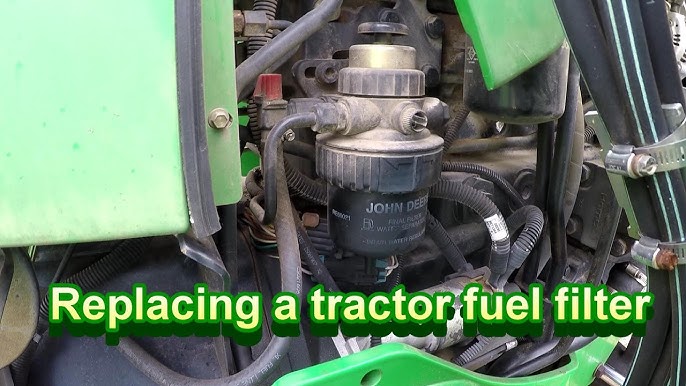
John Deere typically places the primary fuel filter/water separator in an easily accessible location, often on the left or right side of the engine compartment or along the frame rail. It’s usually a cylindrical canister (spin-on type) or a cartridge housed in a clear plastic or metal bowl.
Your operator’s manual has the exact location and part number. Before starting, ensure you have the correct OEM or high-quality replacement filter, a drain pan, and fresh diesel fuel for priming.
Safely Relieving Fuel System Pressure
Modern systems may be under slight pressure. Start by turning the ignition off. For many models, you can relieve pressure by loosening the fuel cap. Place your drain pan underneath the filter assembly. Most John Deere filters have a drain valve at the bottom; open this valve to drain any water and fuel from the housing.
For spin-on filters, the act of loosening will also release pressure. Always wear safety glasses and gloves to protect from diesel spray.
Priming the System to Prevent Air Locks
After installing the new filter and tightening it to the manufacturer’s specification (hand-tight plus a quarter to half turn is typical for spin-ons), you must prime the system. Many newer John Deere tractors have an electric priming pump or a manual plunger on the fuel filter head.
Activate this pump until you feel firm resistance and see clear, bubble-free fuel in the primer line or transparent housing. If your model lacks a primer, you may need to crank the engine in short bursts (10-15 seconds) until it starts, then allow it to run at idle to purge remaining air. Never run the high-pressure pump dry.
Proactive Maintenance to Prevent Future Clogs
An ounce of prevention is worth a pound of cure, especially when it comes to fuel system health. Adopting these simple habits will maximize filter life and ensure consistent power.
Following John Deere’s Recommended Service Intervals
Do not wait for symptoms to appear. John Deere engineers specify filter change intervals (often every 300-500 hours) based on rigorous testing. Adhere strictly to this schedule. In extreme conditions—like very dusty environments or when using fuel of questionable quality—consider changing the filter more frequently.
Keeping a log of your service hours helps you stay on top of this critical maintenance task.
Using Quality Fuel and Fuel Additives
Source your diesel from reputable, high-volume stations. Consider using a dedicated, filtered funnel when refueling to catch any large contaminants.
A quality fuel additive serves two purposes: it improves fuel stability to prevent gum formation, and many contain biocides to inhibit microbial growth and demulsifiers to help separate water from the fuel. Adding a stabilizer is also wise if the tractor will be stored for an extended period.
Regular Water Separator Drainage
Water is the enemy of your fuel system. Get into the habit of draining the water separator bowl (located at the bottom of the filter assembly) daily or before each use, as your manual recommends. On models with a warning light for water, drain it immediately when the indicator activates.
This simple 30-second task prevents water from being drawn into the filter element, where it promotes clogging and microbial growth, and protects your injection system from corrosion.
When to Seek Professional John Deere Service
While filter replacement is a common DIY task, some scenarios indicate a deeper problem that requires a technician’s expertise and diagnostic tools.
Persistent Power Loss After Filter Change
If you replace the fuel filter and the power loss symptoms do not improve, the clog may be secondary to another issue. The problem could be a failing lift pump that isn’t supplying enough fuel to the filter, a pinched or collapsing fuel line, or a restriction elsewhere in the system.
A technician can perform fuel pressure and volume tests to pinpoint the exact cause.
Signs of Fuel Pump Failure
Listen for unusual whining or screeching noises from the fuel tank area, which can indicate a lift pump struggling against a blockage or failing internally. If the pump is unable to build sufficient pressure even with a new filter, it will need replacement.
Professional service ensures the correct high-pressure pump timing and settings are maintained during replacement.
Suspected Contamination in the Entire Fuel System
If you discover severe microbial growth or a large amount of sediment in the filter housing, the entire system may be contaminated. This often requires not just a filter change, but a complete fuel tank cleaning, flushing of all fuel lines, and possibly even servicing or replacing the fuel injectors.
This is a complex job best left to professionals to avoid repeated failures and ensure all contaminants are eradicated.
Conclusion
A clogged fuel filter is far more than a minor inconvenience; it’s a direct threat to the performance and longevity of your John Deere tractor. By acting as a bottleneck in the fuel system, it starves the engine of the vital energy it needs, leading to power loss, stalling, and inefficient operation.
Fortunately, this issue is both diagnosable and preventable. By understanding the symptoms—such as sluggish power response and engine stalling under load—you can take swift action. Regular maintenance, including adhering to service intervals, using clean fuel, and diligently draining water separators, will keep your fuel system clean and your tractor running at its peak.
Remember, when simple filter changes don’t solve the problem, don’t hesitate to contact your authorized John Deere service technician. They have the tools and expertise to diagnose deeper fuel system issues, protecting your investment and ensuring your tractor is ready for any task you have planned. Keep that fuel flowing cleanly, and your John Deere will repay you with years of reliable service.
We recommend watching this video on how to replace a fuel filter: