

Overview
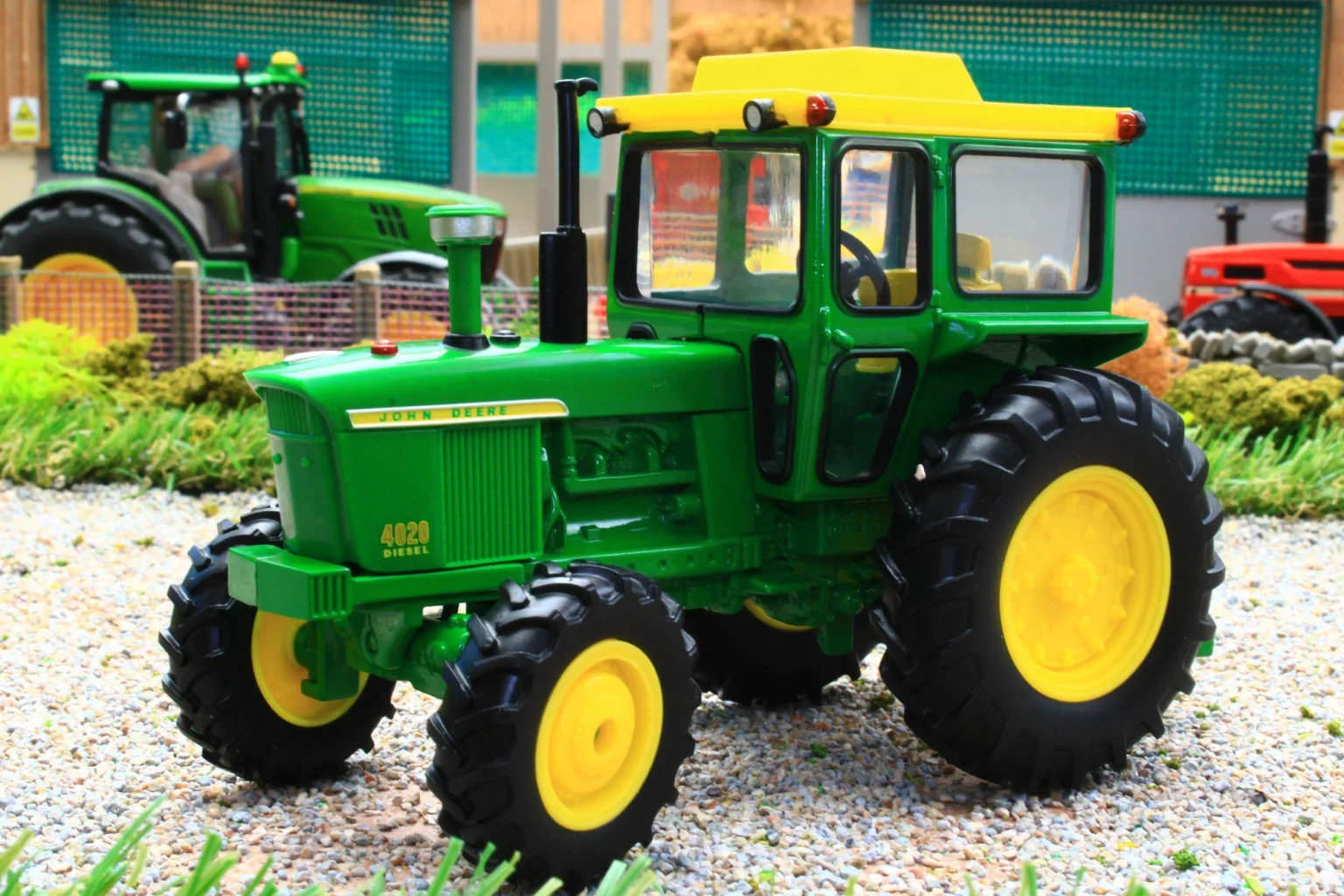
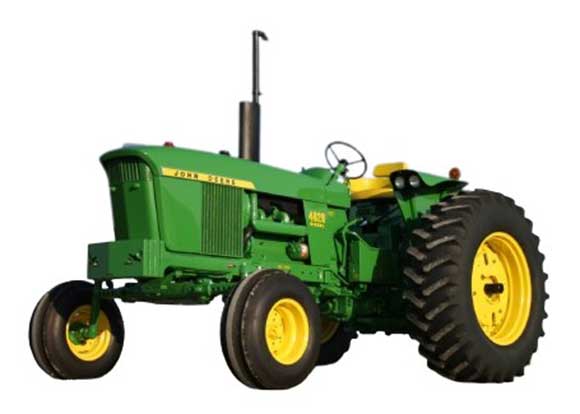
The John Deere 4020 stands as one of the most iconic and influential tractors in agricultural history, representing a quantum leap in farm machinery technology when it was introduced in the mid-1960s. As the flagship model of John Deere’s “New Generation” series, the 4020 combined groundbreaking engineering with practical farm-tested reliability, setting new standards for power, versatility, and operator comfort that would define tractor design for decades to come.
This comprehensive technical reference provides detailed specifications across all critical systems of the John Deere 4020, offering farmers, restorers, and enthusiasts an authoritative guide to this legendary machine. With four distinct engine options—including diesel, gasoline, and LP-gas variants—each producing approximately 93 horsepower, the 4020 delivered exceptional performance for its era.
Its advanced power train featured two transmission choices: the innovative 8-speed Synchro-Range with partial synchronization or the revolutionary Power Shift system that allowed gear changes without clutching—a first for row-crop tractors that dramatically improved productivity.
Beyond its powertrain, the 4020 introduced numerous technological advancements including a closed-center hydraulic system, independent front and rear PTO options, and sophisticated electrical systems that evolved throughout its production run from 1963 to 1972. Available in both standard and row-crop configurations with 2WD or optional 4WD, this tractor demonstrated remarkable adaptability to different farming operations, terrain conditions, and crop requirements.
Note: All specifications reflect factory configurations for the standard John Deere 4020 models produced between 1963-1972. Some variations may exist based on production year, optional equipment, and regional specifications.
Variants & Prices
The John Deere 4020 offered four configurations with distinct pricing reflecting their specialized roles. The standard Row-Crop model started at $7,900 in 1964 ($78,000 today), while premium options like Power Shift transmission added $1,200 and Front-Wheel Assist cost $1,500 extra.
By 1972, fully-equipped High-Crop variants reached $14,000. These historical prices demonstrate how farmers invested in specific features for their operational needs. Today, restored models command $25,000-$45,000, with rare High-Crop versions exceeding $60,000 among collectors, reflecting both their historical significance and enduring mechanical value.
| Model/Year | Base Price (USD) | With Common Options | Adjusted for Inflation (2024) |
|---|---|---|---|
| 1964 Row-Crop Diesel | $7,900 | $9,200* | $78,000 |
| 1968 Standard Diesel | $8,650 | $10,100* | $82,500 |
| 1970 Row-Crop Power Shift | $9,800 | $12,500* | $86,000 |
| 1972 High-Crop Diesel | $11,200 | $14,000* | $89,500 |
| Industrial 600 (1969) | $10,500 | $13,800* | $94,000 |
Engine Specifications
Four engine configurations were available for the John Deere 4020, catering to different fuel preferences and power requirements. The specifications below detail the technical characteristics of each variant, covering displacement, compression, RPM ranges, and maintenance clearances.
| Specification | JD 6.6L 6-cyl diesel | JD 5.6L 6-cyl gasoline | JD 5.9L 6-cyl gasoline | JD 5.9L 6-cyl LP gas |
|---|---|---|---|---|
| Description | John Deere 6-cylinder diesel | John Deere 6-cylinder gasoline | John Deere 6-cylinder gasoline | John Deere LP gas 6-cylinder 12-valve liquid-cooled inline |
| Displacement | 404ci / 6.6L | 340ci / 5.6L | 362ci / 5.9L | 362ci / 5.9L |
| Bore/Stroke | 4.25×4.75 inches / 108×121 mm | 4.25×4.00 inches / 108×102 mm | 4.25×4.25 inches / 108×108 mm | 4.25×4.25 inches / 108×108 mm |
| Compression | 16.5:1 | 7.5:1 | 7.5:1 | 9.0:1 |
| Rated RPM | 2200 | 2200 | 2200 | 2200 |
| Idle RPM | 600-2500 | 650-2500 | – | – |
| Operating RPM | 1500-2200 | 1500-2200 | – | – |
| Firing order | 1-5-3-6-2-4 | 1-5-3-6-2-4 | 1-5-3-6-2-4 | 1-5-3-6-2-4 |
| Starter volts | 24 | 12 | 12 | 12 |
| Coolant capacity | 24qts / 22.7L | 24qts / 22.7L | 24qts / 22.7L | 24qts / 22.7L |
| Oil capacity | – | – | 8qts / 7.6L | 8qts / 7.6L |
| Intake valve clearance | 0.018 inches / 0.457 mm | 0.015 inches / 0.381 mm | – | – |
| Exhaust valve clearance | 0.018 inches / 0.457 mm | 0.028 inches / 0.711 mm | – | – |
| Sparkplug gap | – | 0.025 inches / 0.635 mm | – | – |
| Point gap | – | 0.016 inches / 0.406 mm | – | – |
Transmission Specifications
The John Deere 4020 offered two transmission options: the partially synchronized Syncro-Range and the advanced full power shift. Each system provided distinct operational characteristics, with the Power Shift enabling seamless gear changes without clutching—a significant advantage for productivity and operator comfort
| Specification | 8-speed partially synchronized | 8-speed full power shift |
|---|---|---|
| Transmission | John Deere Syncro-Range | John Deere Power Shift |
| Type | partially synchronized | full power shift |
| Gears | 8 forward and 2 reverse | 8 forward and 4 reverse |
| Oil capacity | 52qts / 49.2L 303 Special | 68qts / 64.4L 303 Special |
| Description | Synchro-Range requires the tractor to be stopped and clutch depressed to select one of four shift stations. Once a station is selected the tractor can be shifted on the move between the two forward gears (and single reverse in stations 1 and 2) by using the clutch | Power Shift allows shift-on-the-move between gears without clutching |
Mechanical Specifications
The mechanical systems of the John Deere 4020 combined rugged durability with operator-focused design. Available in both 2WD and optional 4WD configurations, the tractor featured power steering for reduced effort, hydraulic wet disc brakes for reliable stopping power, and an open operator station with cab availability for comfort in various working conditions.
| Feature | Specification |
|---|---|
| Drive | 4×2 2WD/4×4 HFWD 4WD *Front-wheel assist was optional after 1969 |
| Differential lock | mechanical rear (Optional) |
| Description | Power steering • Hydraulic wet disc brakes • Open operator station (Cab optional) |
Capacity Specifications
The fluid capacities of the John Deere 4020 varied depending on fuel type and transmission configuration. With generous fuel tanks for extended operation and specific hydraulic system requirements for each transmission option, these specifications are essential for proper maintenance and efficient field performance.
| Fuel/System Type | Capacity |
|---|---|
| Gasoline Fuel | 34gal / 128.7L |
| Diesel Fuel | 34gal / 128.7L |
| LP-gas Fuel | 45gal / 170.3L |
| Synchro-Range Hydraulic system | 10gal / 37.9L |
| Power Shift Hydraulic system | 12gal / 45.4L |
Hydraulics Specifications
The hydraulic system of the John Deere 4020 utilized a closed-center design, providing efficient power delivery for implements. With different capacities for Synchro-Range and Power Shift transmissions, and substantial flow rates, this system supported a wide range of attachments and ensured responsive implement control during demanding operations.
| Feature | Specification |
|---|---|
| Type | closed center |
| Synchro-Range Capacity | 10gal / 37.9L |
| Power Shift Capacity | 12gal / 45.4L |
| Pressure | 2250psi / 155.1bar |
| Valve | 1 |
| SCV flow | 6gpm / 22.7lpm |
| Total flow | 18gpm (early) / 68.1lpm |
Power Take-Off (PTO) Specifications
The Power Take-Off (PTO) system offered versatile power transfer capabilities with both rear and front independent PTO options. Supporting multiple speed configurations (540/1000 RPM), this system enabled the operation of various implements, making the John Deere 4020 adaptable to different farming tasks and equipment requirements.
| Feature | Specification |
|---|---|
| Rear PTO | independent |
| Rear RPM | 540/1000/1000 |
| Engine RPM | 1000@1900 |
| Front PTO | independent |
| Front RPM | 1000 |
Dimenstions & Tires Specifications
The dimensions and tire configurations of the John Deere 4020 were designed for agricultural versatility. Available in both row-crop and standard configurations with different wheelbases and weight ranges, the tractor could be equipped with various tire options to optimize performance for specific field conditions and crop requirements.
| Feature | Specification |
|---|---|
| Row crop Wheelbase | 97.5inches / 247cm |
| Standard Wheelbase | 100.25inches / 254cm |
| Weight | 8225 to 9560 pounds |
| Front tire | 6.00-16 |
| Rear tire | 15.5-38 |
| Ag front | 6.00-16 (row crop) / 7.50-18 (standard) |
| Ag rear | 15.5-38 (row crop) / 18.4-34 (standard) |
Electrical Specifications
The electrical system of the John Deere 4020 evolved during its production years, featuring different grounding configurations and charging systems. With a robust Motorola alternator providing 55 charging amps and battery options for both 12V and 24V systems, this setup ensured reliable starting and electrical power for lights, instruments, and accessories.
| Feature | Specification |
|---|---|
| Ground | positive (1964-1969) / negative (1969-1972) / floating (24V) |
| Charging system | Motorola alternator |
| Charging amps | 55 |
| Batteries | 2 (24V system) / 1 (12V system) |
| Battery volts | 12 |
| Battery AH | 75 |
Disclaimer: The technical specifications provided on this page are for informational and reference purposes only. While we strive to present accurate and comprehensive data about the John Deere 4020 tractor, this information does not constitute official manufacturer documentation and should not be considered definitive for maintenance, repair, or restoration work.
This reference guide is intended to complement (not replace) official technical resources. Safety should always be your primary concern when working with agricultural machinery. When in doubt, consult with qualified John Deere technicians or authorized service centers to ensure proper procedures and specifications for your specific tractor model.
Always verify critical measurements, capacities, and technical details with official sources before performing any maintenance, repairs, or modifications. Tractor specifications may vary based on production year, serial number, optional equipment, and regional configurations.