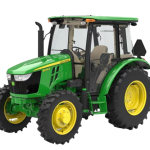



Looking for clear, practical answers about the John Deere 5075E utility tractor? You’ve come to the right place. This comprehensive FAQ guide cuts through the noise to deliver the essential information you need. Whether you’re a farmer, a landowner, or a professional operator, we cover every critical aspect of this powerful 75-horsepower workhorse.
- General Overview & Capabilities
- Engine, Power & Key Specifications
- Loader Performance & Lift Capacity
- Attachments & Compatibility
- Transmission & Driving
- Hydraulics & 3-Point Hitch
- Routine Maintenance & Service
- Common Problems & Reliable Fixes
- Buying Advice & Pricing
- Parts, Upgrades & Professional Modifications
From its core capabilities and engine specifications to loader performance and compatible attachments, we break down the details. You’ll find expert insights on choosing the right transmission, understanding its hydraulic system, and navigating common maintenance and potential issues.
We also provide straightforward buying advice and pricing considerations to help you make a confident investment decision.
General Overview & Capabilities
Let’s start with the big picture. These questions define the John Deere 5075E’s purpose, its ideal user, and its place on your farm or worksite. We’ll clarify its core strengths and where it truly shines as a utility-class workhorse.
What is the John Deere 5075E best used for?
The 5075E is a true utility tractor built for serious acreage and demanding farm tasks. It excels at heavy tillage, hay work (baling, raking, mowing), and material handling with its powerful loader.
It’s the ideal machine for small to mid-sized farms, large property maintenance, and commercial landscaping. Think of it as the backbone for operations that have outgrown compact tractors but don’t require an enormous row-crop model.
How does the 5075E differ from smaller compact tractors?
The 5075E is in a different weight and power class altogether. It offers significantly more horsepower (75 engine HP), a heavier frame for stability, and greater hydraulic capacity to run larger, wider implements.
While compacts are for light chores, the 5075E handles primary fieldwork. It can pull heavier plows and discs, lift larger round bales, and operate high-demand PTO equipment like large rotary cutters for extended periods.
What does the “5075” model number signify?
In John Deere’s utility tractor numbering system, the first two digits often relate to the series and frame size, while the last two indicate the approximate engine horsepower. For the 5075E, the “75” signifies it’s a 75-horsepower tractor.
The “5” denotes it’s part of the 5E Series, which sits between the smaller 3E/4E compacts and the larger, more feature-rich 6R Series. The “E” stands for Economy, representing a value-focused yet capable line within the utility range.
What are the key advantages of the 5075E utility tractor?
Its primary advantages are robust power, a strong hydraulic system, and a simple, reliable design. It delivers essential tractor performance without the complex electronics of premium models, making it easier to service.
You get proven John Deere PowerTech engine reliability, multiple transmission options including a convenient PowrReverser, and the ability to use Category 1 and 2 implements. It’s a no-frills, high-value workhorse built for durability.
What type of property or farm size is the 5075E suited for?
The 5075E is perfectly suited for properties ranging from 20 to over 100 acres, depending on the tasks. It’s the quintessential tractor for a small to medium-sized diversified farm, a large hay operation, or extensive acreage maintenance.
It’s not meant for a 5-acre hobby farm—that’s overkill. But for managing pastures, planting food plots, maintaining long driveways, and handling substantial material movement, its size and power hit the sweet spot for efficiency.
Can the 5075E be used for commercial or just farm work?
Absolutely, it’s a favorite in commercial applications. Its durability and power make it ideal for rental yards, landscape contractors, municipalities, and grounds maintenance crews at schools or industrial parks.
Common commercial uses include road-side ditch maintenance with a boom mower, loading sand or gravel, clearing land with a heavy-duty grapple, and towing equipment trailers around job sites. Its versatility extends well beyond traditional farming.
What is the operator platform and cabin like on the 5075E?
The 5075E offers an open operator station (ROPS) as standard, designed for functionality and easy entry/exit. Optional deluxe seats and a factory cab are available for enhanced comfort. The controls are logically laid out for all-day operation.
In the cab model, operators enjoy a quiet, pressurized environment with heating and air conditioning. The vantage point is excellent for loader work. Even the open station provides a comfortable and commanding view of the implements and surroundings.
Is the 5075E available in 2WD and 4WD configurations?
Yes, the 5075E is offered in both Mechanical Front-Wheel Drive (MFWD, essentially 4WD) and two-wheel-drive (2WD) configurations. The MFWD model is by far the most popular and recommended choice for most buyers.
MFWD provides crucial traction for loader work, navigating wet fields, and pulling heavy implements on slopes. The 2WD version is primarily a cost-saving option for very light, dry conditions where maximum traction is less critical.
How does it compare to similar tractors from Kubota or Massey Ferguson?
The 5075E competes directly with models like the Kubota M4-71 and Massey Ferguson 4700 Global Series. John Deere’s key strengths are its strong dealer network, high resale value, and the simplicity of its base powertrain.
Comparisons often focus on features vs. value. The Deere may have a simpler dash, while competitors might include more digital displays standard. Ultimately, dealer proximity, personal comfort with controls, and parts support are decisive factors.
What are the standard and optional features on a 5075E?
Standard features include a 12V electrical system, wet disc brakes, independent 540 RPM PTO, and a Category 1/2 three-point hitch. You also get basic instrumentation and a choice of transmissions starting with the Synchro shuttle.
Key options dramatically expand capability: a factory cab with climate control, a self-leveling loader (like the 512L or 520M), additional hydraulic remotes (SCVs), a third-function kit for grapples, and upgraded lighting packages for night work.
Engine, Power & Key Specifications
This section dives into the heart of the machine. Here we break down the 5075E’s powertrain, its measurable outputs, and the critical specifications that define its capability and physical footprint for your worksite or farm.
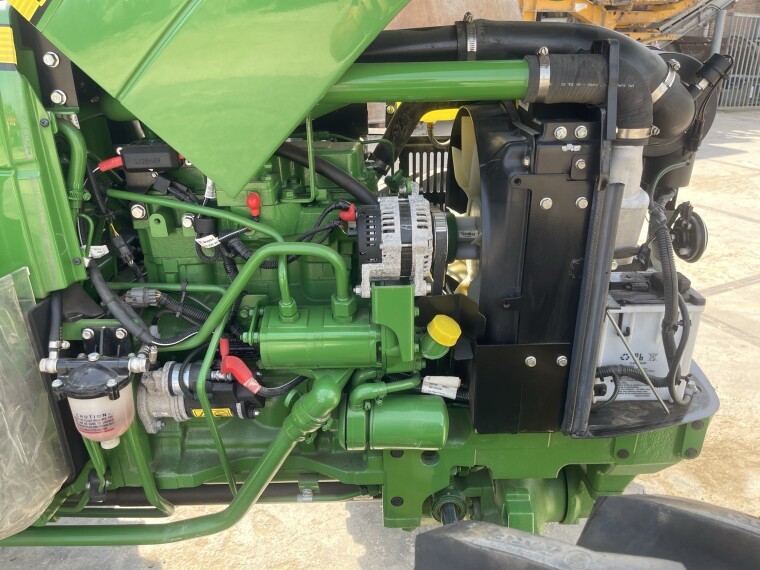
What engine does the John Deere 5075E use?
The 5075E is powered by a John Deere PowerTech engine. This is a 4.5-liter, 4-cylinder, liquid-cooled diesel engine, renowned for its durability and fuel efficiency in agricultural applications.
It’s a naturally aspirated engine in its base configuration, designed for reliable, high-torque output at lower RPMs. This engine family is built to withstand long hours of heavy PTO work, such as running a baler or a large rotary cutter.
How much horsepower (HP) does the 5075E have?
The model number tells the story: it delivers approximately 75 engine horsepower. More precisely, it’s rated at 75 HP (56 kW) gross engine power. This is the raw power generated by the engine itself.
When measured at the PTO (power take-off), which is the usable power for running implements, it’s rated at about 68 HP (51 kW). This PTO horsepower is the critical figure for determining what size mower, baler, or generator you can effectively operate.
What is the torque rating of the 5075E engine?
Torque is the turning force that gets heavy loads moving. The 5075E’s engine produces a strong 252 lb-ft (342 Nm) of torque. This high torque output is essential for pulling implements through tough soil or starting a heavy PTO load.
This high-torque, low-RPM design means the engine doesn’t have to scream to do hard work. It provides plenty of lugging power, allowing you to drop to a lower gear and maintain momentum under heavy draft loads without stalling.
What type of fuel system and injection does it have?
It utilizes a direct fuel injection system. This technology injects diesel fuel directly into the combustion chamber at very high pressure, leading to more efficient and complete combustion.
The result is better fuel economy, improved cold-start capability, and lower emissions compared to older indirect injection systems. It’s a reliable, mechanical injection system designed for longevity and consistent performance.
What is the PTO horsepower and why is it important?
PTO horsepower is the power actually delivered to the rear (or optional mid) PTO shaft to drive implements. For the 5075E, this is approximately 68 HP. It’s always less than gross engine horsepower due to power losses through the drivetrain.
This number is crucial because it dictates the size and type of implement you can run. You must match your tractor’s PTO HP to the implement’s requirements. For example, a large round baler may require a minimum of 65 PTO HP, making the 5075E a perfect match.
What is the fuel tank capacity and expected runtime?
The 5075E has a sizable fuel tank with a capacity of approximately 26.4 gallons (100 liters). This large capacity is designed for long workdays in the field without frequent refueling stops.
Given its efficient engine, under typical heavy load conditions like plowing or baling, you can expect a fuel burn rate of roughly 1.5-2 gallons per hour. This translates to a theoretical runtime of 13 to 17 hours on a single tank, depending on the workload.
Does the 5075E have a turbocharger?
The standard John Deere 5075E model features a naturally aspirated engine, meaning it does not have a turbocharger. It relies on atmospheric pressure for air intake. This design prioritizes simplicity, reliability, and strong low-RPM torque.
Some competing models in this horsepower class may offer turbocharged options for a higher power density. However, the naturally aspirated 4.5L engine in the 5075E is proven and provides ample power for its intended utility and farm tasks.
What are the physical dimensions (length, width, height)?
Dimensions vary with configuration, but a typical 5075E with the ROPS (Roll-Over Protective Structure) is about 142 inches (360 cm) long (without implements), 75-90 inches (190-228 cm) wide depending on wheel spacing, and 94 inches (239 cm) tall to the top of the ROPS.
These dimensions are important for maneuvering in barns, under trees, and for transport on a trailer. Width is often adjustable to suit different row spacing or for added stability on slopes. Always measure your doorways and trailer before purchase.
What is the operating weight of the 5075E?
Operating weight varies greatly with options. A bare 5075E tractor starts around 5,800 lbs (2,630 kg). Adding the essential MFWD (4WD) and a standard loader like the 512L can bring the total operating weight to approximately 7,800 lbs (3,540 kg) or more.
This is a critical figure for transportation (requiring a substantial trailer and truck), for understanding ground compaction, and for stability. Adding fluid in the tires or wheel weights can increase this weight by over 1,000 lbs for improved traction.
What is the drawbar pull and hydraulic flow capacity?
Drawbar pull is its pulling force at the hitch. The 5075E can deliver over 6,000 lbs (2,722 kg) of drawbar pull, enabling it to pull heavy wagons, large disc harrows, or box blades through tough material.
Hydraulic flow is the lifeblood for loaders and implements. The gear pump provides approximately 14.5 gallons per minute (55 L/min) of total flow. This powers the power steering, loader cylinders, and remotes, ensuring strong and responsive implement operation.
Loader Performance & Lift Capacity
The front-end loader transforms the tractor into a versatile material-handling machine. This section covers the specific loaders available, their hard numbers for lift and force, and practical insights on operation and attachments to maximize your investment.
Which front-end loaders are compatible with the John Deere 5075E?
The John Deere 5075E is typically paired with two main loaders: the 512L and the more modern 520M. The 512L is a strong, traditional loader, while the 520M often features improved geometry and self-leveling as a key option.
Both are designed specifically for the 5E Series frame. Choosing between them depends on availability, specific features like self-leveling, and your dealer’s recommendation. The 520M is generally the newer and more featured model of the two.
What is the maximum lift capacity of the 512L or 520M loader?
Lift capacity is measured at the pivot pins. The 512L loader can lift approximately 2,850 lbs (1,293 kg) to full height. The 520M loader has a similar, often slightly improved, rated capacity.
It’s critical to remember this is a “at the pins” rating. The actual weight you can lift in a bucket will be less, as the load is positioned further forward. Always factor in the weight of the attachment itself (forks, grapple) when calculating your true payload.
What is the breakout force of the loader?
Breakout force is the downward digging force at the cutting edge of the bucket. For the 512L/520M loaders, this is typically around 4,000 to 4,300 lbs-force (17.8-19.1 kN).
This high breakout force allows you to dig into piled materials like gravel, mulch, or soil, and pry out rocks or stumps. It’s a key indicator of the loader’s raw power for excavation and prying tasks, not just lifting.
How does the self-leveling feature work and is it worth it?
Self-leveling is a mechanical linkage that automatically keeps the bucket level as you raise the loader arms. This prevents material from spilling backward as you lift, a common issue with non-self-leveling loaders.
For any repetitive material handling—like loading gravel, manure, or feed—it is absolutely worth the investment. It saves immense time and frustration, improves safety by preventing surprise spills, and is a major operator comfort upgrade.
What is the maximum lift height to full height?
Maximum lift height determines what you can dump into. The 512L/520M loaders provide a lift height of about 126 to 129 inches (320-328 cm) to the bottom of the bucket at full raise.
This is sufficient to clear the sides of a tall dump truck (around 10.5 feet) or a high-sided manure spreader. It’s a crucial specification for commercial or farm use where loading into large containers is a daily task.
How do you attach and detach the loader on a 5075E?
The 5075E uses a pinned, non-quick-attach frame for the loader mounting. Attachment involves aligning the loader’s main frame with the tractor’s mounting brackets and inserting large locking pins. It’s a two-person or careful one-person job.
Detaching requires parking on level ground, lowering the loader to stands, removing the hydraulic quick-connect lines, and then driving the tractor slowly forward out of the frame. It’s more involved than a skid-steer style quick attach but is very robust.
Can you use skid-steer style attachments on the 5075E loader?
Not directly. The factory John Deere loaders use a proprietary pin-on bucket design. However, a universal skid-steer quick-attach adapter plate can be welded or bolted onto the loader arms.
Once this adapter is installed, you can then use the vast universe of skid-steer attachments: pallet forks, grapples, snow plows, and specialty buckets. This is one of the most popular and valuable modifications owners make to increase versatility.
What is the recommended bucket size for general use?
For the 5075E, a 72-inch (1.8 m) material bucket is the standard and most versatile choice. It matches the tractor’s width for easy grading and can move a substantial volume of material like soil, gravel, or feed.
For lighter materials like mulch or snow, an 84-inch bucket can be efficient. For heavy clay or rocky soil, a narrower 60-inch bucket with teeth may be better to concentrate breakout force. The standard 72-inch is the best all-around starting point.
How does loader performance change with different rear ballast?
Rear ballast is non-negotiable for safe and effective loader use. Without it, the rear wheels will lift (posing a tip-over risk) and you’ll lose traction. Proper ballast allows the loader to use its full lift capacity safely.
Ballast can be a heavy rear implement (box blade, cutter), fluid in the rear tires, or suitcase weights. The goal is to have enough weight so the rear tires just begin to compress when lifting a maximum load, ensuring stability and power to the ground.
What are common aftermarket loader attachments for the 5075E?
Beyond buckets, the most transformative attachments are pallet forks for moving supplies and a root grapple for clearing brush, logs, and debris. A bolt-on bucket tooth bar dramatically improves digging in hard soil.
For snow, a front-mounted snow plow or snow blower is common. With a third-function hydraulic kit, hydraulic attachments like grapples and post drivers become possible, unlocking the loader’s full potential as a multi-tool.
Attachments & Compatibility
A tractor’s true value lies in the implements it can power. This section details the 5075E’s hitch, PTO, and hydraulic compatibility, answering what tools it can run, from essential farm equipment to specialized attachments for land management.
What category Three-Point Hitch does the 5075E have?
The John Deere 5075E comes standard with a Category 1 and 2 convertible Three-Point Hitch. This is a major versatility feature. You can use the more common Category 1 implements by simply flipping the lower link balls.
For larger, heavier implements designed for bigger tractors, you switch to the Category 2 setting. This flexibility allows you to choose from a vast used and new implement market, making it a very practical and economical setup.
What is the lift capacity of the Three-Point Hitch?
The Three-Point Hitch on the 5075E is strong, with a lift capacity of approximately 2,535 lbs (1,150 kg) at 24 inches behind the hitch points. This is a standardized measurement that reflects real-world usability.
This capacity means you can confidently lift and transport heavy implements like a large rotary cutter, a fully loaded manure spreader, or a medium-sized disc harrow. It’s a key spec for determining if an implement is a suitable match.
What PTO types and speeds are available?
The 5075E features a standard, independent 540 RPM rear PTO. This is the universal speed for most agricultural implements like mowers, balers, and tillers. The PTO clutch is independent, meaning you can engage it while the tractor is stationary or moving.
An optional 540/540E Economy PTO is available. The Economy mode allows you to run certain implements (like a mower in light grass) at a lower engine RPM while maintaining 540 PTO RPM, saving fuel and reducing noise.
What size rotary cutter (bush hog) can it handle?
With its 68 PTO horsepower, the 5075E can comfortably handle 6-foot to 8-foot rotary cutters. A 6-foot cutter is a perfect match for heavy-duty brush cutting, while a 7 or 8-foot cutter is ideal for efficient mowing of pastures and fields.
The deciding factors are terrain and vegetation density. For very thick, heavy brush, stick to a 6-foot model to avoid overloading the tractor. For maintaining open pastures, an 8-foot cutter maximizes productivity.
Can the 5075E run a round baler? Which models?
Yes, the 5075E is a classic match for small to mid-sized belt-style round balers. Its 68 PTO HP is sufficient for balers producing 4×4 ft or 4×5 ft bales. Popular models include the John Deere 450, 460, or equivalent from other brands like Vermeer or Massey Ferguson.
It’s crucial to check the baler’s minimum PTO horsepower requirement. The 5075E can handle most standard-density balers but may struggle with high-density models or in extremely wet, heavy hay conditions that require more power.
What are the best rear blades and box blades for it?
For a 5075E, look for heavy-duty 6-foot to 7-foot rear blades and 6-foot to 7-foot box blades. The extra weight and width of these implements match the tractor’s power, allowing for effective grading, ditching, and land shaping.
Brands like Frontier (John Deere’s brand), Everything Attachments, or Land Pride offer models in this size range with features like offsetting blades and adjustable scarifiers. The tractor has the strength to pull a fully loaded box blade through tough material.
Is a backhoe attachment available for the 5075E?
Yes, a subframe-mounted backhoe is available as a factory option, such as the John Deere 485A. This is not a “quick-attach” toy; it’s a serious digging tool with a reach over 14 feet and a digging depth around 9 feet.
The installation is more permanent, requiring the subframe to be bolted to the tractor’s chassis. It’s a significant investment but transforms the tractor for trenching, stump removal, and pond work. Removal takes 20-30 minutes.
Can you use a post hole auger with it?
Absolutely. A Category 1 or 2 post hole digger is a common and highly useful attachment. The 5075E’s hydraulic system provides ample flow to run a hydraulic auger motor smoothly, which is preferable to a sheer-pin PTO model for tough conditions.
You can power augers up to 18 inches in diameter, depending on soil type. For rocky ground, a hydraulic auger with a downforce kit (using tractor hydraulics to push down) is a game-changer compared to relying solely on the implement’s weight.
What about front-mounted attachments like snow blowers?
Front-mounted snow blowers are a popular option for the 5075E, especially with a cab. These are typically driven by a mid-PTO (which is an optional add-on) and use the tractor’s hydraulic system to control the chute rotation and deflection.
These are heavy-duty, commercial-grade snow blowers, often 74 inches wide or more, capable of handling deep snow. The setup requires the front blower, a mid-PTO kit, and a subframe, making it a dedicated but extremely effective winter configuration.
How do you add rear hydraulic remotes (SCVs) for implements?
The 5075E can be equipped with up to three rear Selective Control Valves (SCVs or remotes). These are factory-ordered options or can be dealer-installed later. They provide auxiliary hydraulic power to the rear of the tractor.
You need these remotes to operate implements with hydraulic functions: top-and-tilt kits for precision grading, a round baler’s twine wrap, a grapple on a rear-mounted blade, or the swing of a log splitter. One remote is essential, two or three are standard for serious work.
Transmission & Driving
The transmission defines the tractor’s character and how it connects power to the ground. This section explains the different gearbox options, their operation, and driving characteristics, helping you choose the right one for your type of work and experience level.
What transmission options are available on the 5075E?
The 5075E offers three main transmission choices. The base option is the 9F/3R Synchro Shuttle. The popular upgrade is the 9F/3R PowrReverser with a hydraulic shuttle lever. On certain newer models, a hydrostatic CVT is available as a premium option.
Each serves a different need and budget. The Synchro is a manual collar-shift, the PowrReverser adds a clutchless forward/reverse shuttle, and the CVT provides infinite speed control. Your work type—like heavy loader use vs. field work—will dictate the best choice.
What is the PowrReverser transmission and how does it work?
The PowrReverser is a synchronized transmission with a separate hydraulic shuttle lever on the left side of the steering column. You use the clutch to change gear ranges, but you can change direction from forward to reverse simply by flicking this lever.
This is a game-changer for loader work, hay handling, or any repetitive forward/reverse task. It allows quick direction changes without clutching, reducing operator fatigue dramatically. It’s considered one of the best value upgrades for the 5075E.
What are the advantages of the Synchro Shuttle transmission?
The 9F/3R Synchro Shuttle is the most affordable and mechanically simple option. It’s a fully synchronized transmission, meaning you can shift between its nine forward gears on-the-go without grinding gears, once the tractor is moving.
Its advantage is cost and reliability. It’s perfect for operators who do more continuous forward work like mowing, tilling, or raking hay, where frequent direction changes are less common. It requires using the clutch pedal for every direction change.
Is a CVT (Continuously Variable Transmission) available?
Yes, a Continuously Variable Transmission (CVT) is offered as a premium option on newer 5075E models. It uses a hydrostatic pump and motor system to provide an infinite number of speed ratios between zero and top speed.
The operator sets a desired speed or maximum speed limit, and the transmission automatically adjusts the ratio for optimal power. It delivers maximum efficiency and ease of use, especially for tasks requiring frequent speed adjustments, but comes at a higher initial cost.
How many forward and reverse gears does each transmission have?
The Synchro Shuttle and PowrReverser both offer 9 forward and 3 reverse gears, organized in three ranges (Low, Medium, High) with three synchronized gears in each range. This provides a good spread of speeds from slow creep to road transport.
The CVT transmission, by design, has infinite gear ratios. The operator uses a single lever or dial to select any speed within its wide operational range, from inches-per-minute creep to over 25 mph top speed, with no discrete “gears” to shift through.
What is the top road speed of the 5075E?
With the standard Synchro or PowrReverser transmissions, the top road speed in High range, 3rd gear is approximately 25 mph (40 km/h). This is sufficient for short trips on rural roads between fields or to a nearby worksite.
The optional CVT transmission can achieve a similar or slightly higher top speed. It’s important to remember that tractors are not designed for high-speed travel; stability and braking distance are optimized for field, not highway, speeds.
Is the 5075E easy to operate for a first-time user?
The learning curve depends heavily on the transmission. The PowrReverser or CVT make it very easy for a first-time user, as they simplify the most challenging part: direction changes and speed control. The hydrostatic CVT is the most intuitive.
The standard Synchro Shuttle requires more skill, as you must coordinate clutch, throttle, and gear shifter. However, for anyone with manual car experience, it becomes second nature quickly. Power steering and clear controls aid in overall ease.
How does the mechanical front-wheel drive (MFWD) engage?
The MFWD (4WD) on the 5075E is engaged and disengaged via a lever or electric switch, depending on the model year and configuration. It’s a manual engagement system, meaning you choose when to use it.
The rule of thumb is to engage MFWD *before* you need it—when entering a soft field, starting loader work, or on a slope. It should be disengaged on dry, hard surfaces like pavement to avoid driveline wear and “binding” during turns. Never engage it while wheels are spinning.
What type of brakes does it have and how effective are they?
The 5075E is equipped with hydraulically-actuated wet disc brakes mounted inboard on the rear axle. “Wet” means they are bathed in oil, which cools them and prevents contamination, leading to very long life and consistent performance.
They are highly effective, even when the tractor is heavily loaded. The left and right brakes are independently operable via the two pedals, which can be locked together for road travel. This allows for sharp turns in the field using brake-assisted steering.
How does the transmission choice affect resale value?
Transmission choice significantly impacts resale value and marketability. The PowrReverser is often the most sought-after and commands the highest resale value in the used market, as it’s the perfect balance of capability and convenience for most buyers.
The base Synchro Shuttle will have a lower resale value but also a lower initial cost. The premium CVT, while excellent, may have a more niche buyer pool but will hold value well for the right operator who prioritizes ultimate ease of use and efficiency.
Hydraulics & 3-Point Hitch
The hydraulic system is the muscle behind the implements. This section details the 5075E’s hydraulic power, control options for the Three-Point Hitch, and how to expand the system for advanced attachments, ensuring you can run the tools you need effectively.
What is the hydraulic pump flow rate (gpm) on the 5075E?
The 5075E is equipped with a gear-type hydraulic pump providing a total flow of approximately 14.5 gallons per minute (55 liters per minute). This flow is shared between the power steering, loader/implement circuits, and any remote valves.
This capacity is sufficient for running most common implements smoothly, including loaders, grapples, and top-and-tilt kits. For very high-demand attachments like certain large hay balers or complex planters, checking specific implement requirements is advised.
How many rear hydraulic remotes (SCVs) can it have?
The 5075E can be configured with up to three rear Selective Control Valves (SCVs or remotes). These are typically factory-ordered options but can also be dealer-installed. Most tractors are sold with one or two as a starting point.
Each remote provides a pair of couplers to connect hydraulic hoses from implements. Common uses include operating a grapple, controlling a top-link cylinder for grading, running a baler’s twine arm, or activating a hydraulic chute on a snow blower.
What is the “lift capacity” of the Three-Point Hitch?
Lift capacity is measured at 24 inches behind the hitch points. The 5075E’s Three-Point Hitch can lift approximately 2,535 lbs (1,150 kg). This is a standardized rating that reflects the real-world weight of an implement hanging on the links.
This strength allows you to handle heavy implements like large rotary cutters, fully loaded manure spreaders, or medium disc harrows with confidence. It’s a critical spec to compare when choosing implements to ensure they are within the tractor’s capability.
Does the 3-point hitch have position control and draft control?
Yes, the 5075E features both position control and draft control. Position control lets you set a fixed height for the hitch (e.g., for transport or consistent mowing height). Draft control automatically adjusts hitch height based on pull resistance to maintain consistent tillage depth.
This is a professional-grade feature. For example, when plowing, draft control will raise the plow slightly if it hits a hard spot to prevent stalling, then lower it back down, maintaining uniform depth and reducing operator strain.
What is a “top-and-tilt” kit and why would I add one?
A top-and-tilt kit replaces the manual top link and one of the side lift links with hydraulic cylinders. This allows you to adjust the angle and tilt of a rear implement (like a box blade or rear blade) from the operator’s seat using two of your rear remotes.
It is a transformative upgrade for precision grading, landscaping, or ditch work. You can fine-tune the implement’s pitch and side-to-side level on-the-fly, achieving a smooth, finished grade in far less time and with much greater accuracy.
How do you add a third-function valve for the loader?
A third-function valve adds a separate hydraulic circuit to the loader, typically controlled by a button or toggle on the loader joystick. This is essential for operating hydraulic attachments like a grapple, angle snow plow, or post driver.
Kits are available from John Deere or aftermarket suppliers. Installation involves mounting the valve block, tapping into the tractor’s pressure and return lines, and wiring the switch into the cab. It’s a common and highly recommended dealer-installed upgrade.
Can the hydraulic system run a log splitter or woodchipper?
Yes, but with important considerations. The 5075E can power a log splitter via its rear remotes, but it may operate slower than a dedicated splitter with its own larger engine due to the tractor’s 14.5 GPM flow. It’s perfect for intermittent use.
For woodchippers, most are PTO-driven, not hydraulic. The tractor’s PTO horsepower is the key factor here. A 6-inch capacity chipper is well within its capability. Always ensure the attachment’s hydraulic or PTO requirements match the tractor’s output.
What is the difference between open-center and closed-center hydraulics on this model?
The 5075E uses an open-center hydraulic system. In this design, hydraulic fluid flows continuously from the pump through the valves and back to the tank when no function is activated. When you operate a lever, the flow is diverted to perform work.
This is a simple, robust, and cost-effective system standard on utility tractors. Closed-center systems, found on larger, more complex machines, maintain constant pressure and only pump fluid on demand, offering efficiency benefits at a higher cost and complexity.
How do you adjust the sensitivity of the hitch or remotes?
Draft control sensitivity is adjusted via a knob or lever on the right side of the operator’s platform. Turning it adjusts how aggressively the system responds to changes in draft force—vital for matching different soil conditions.
Remote valve flow rate (how fast a cylinder extends/retracts) is typically adjusted at the remote coupler itself using a flow control knob. This lets you fine-tune the speed of an attached hydraulic cylinder for precise, smooth operation.
What are common signs of hydraulic system problems?
Common signs include slow or weak loader/implement operation, jerky cylinder movement, and unusual whining or groaning noises from the pump. Overheating of the hydraulic fluid and external leaks at hoses, seals, or cylinders are clear red flags.
Most issues stem from contaminated fluid, clogged filters, or worn pump seals. Regular maintenance—changing hydraulic fluid and filters per the schedule—is the best prevention. Air in the system (causing spongy action) can often be purged by cycling the cylinders.
Routine Maintenance & Service
Keeping your 5075E in peak condition ensures longevity and reliability. This section covers the essential maintenance schedule, fluid specifications, and simple procedures that every owner should know to prevent costly downtime and repairs.
What is the recommended engine oil and oil change interval?
John Deere recommends using John Deere Torq-Gard Supreme 15W-40 diesel engine oil or an equivalent API CK-4/SM-rated oil. The oil change interval is typically the first 50 hours for a new engine, then every 200 hours or annually thereafter, whichever comes first.
Using the correct oil and changing it regularly is the single most important factor for engine longevity. Always change the oil filter with every oil change. Operating in extreme dust or under heavy load may justify more frequent changes.
How often should the hydraulic fluid and filters be changed?
The hydraulic system uses John Deere Hy-Gard transmission/hydraulic fluid. The initial change is recommended at 50 hours. After that, the fluid and both the suction and pressure filters should be changed every 600 hours or every two years.
Maintaining clean hydraulic fluid is critical for the health of pumps, valves, and cylinders. If you notice performance issues or contamination, change the fluid and filters immediately, regardless of hours.
What is the service schedule (e.g., 50-hour, 200-hour, annual)?
Key intervals are: 50-hour (initial break-in: engine oil/filter, hydraulic oil/filters), 200-hour (engine oil/filter, air filter service), 400-hour (fuel filter), and 600-hour (major: hydraulic oil/filters, coolant check).
An annual service is crucial if you don’t hit the hour marks, as time degrades fluids and filters. Always consult your official operator’s manual for the exact schedule for your specific model and transmission type.
How do you check and clean the air filter?
The 5075E has a two-stage dry-type air filter. Check it visually every 50 hours. To service it, release the clamps and remove the outer cover. Gently tap the outer filter element on a flat surface to dislodge dust. Never wash or oil it.
If the inner safety element is dirty, the entire filter assembly must be replaced. Never run the engine without the filter canister properly sealed. In dusty conditions, check and clean the outer filter much more frequently.
What type of coolant does it use and when should it be changed?
Use a low-silicate, ethylene glycol antifreeze that meets John Deere specifications, typically mixed 50/50 with distilled water. John Deere Cool-Gard II is the OEM recommendation. The cooling system should be drained, flushed, and refilled every 1,200 hours or 3 years.
Check the coolant level regularly in the recovery tank when the engine is cold. Never open the radiator cap when hot. Maintaining proper coolant mix prevents freezing, boiling over, and corrosion inside the engine block.
How do you grease the loader and other common lubrication points?
Use a standard grease gun with John Deere Multi-Purpose Grease (AM125M). Grease the loader and three-point hitch pivot points every 10 hours of operation or daily under severe use. This includes all bucket pins, loader arm pivots, and ball ends on the hitch.
Don’t forget the steering tie-rod ends and brake pedal shafts. Wipe fittings clean before greasing, and pump grease until you see fresh grease purging from the seals. This forces out dirt and moisture, preventing premature wear.
What are the tire pressure recommendations?
For R1 agricultural tires, typical pressure is 12-16 PSI for the rear and 28-32 PSI for the front (MFWD). For R4 industrial tires, pressures are higher: 20-24 PSI rear and 35-45 PSI front. Always check your tire sidewall for max pressure.
Correct pressure is vital for traction, ride quality, and preventing tire damage. Adjust based on load: add PSI for heavy loader work, reduce slightly for field traction. Check pressure when tires are cold for an accurate reading.
How do you maintain the battery and electrical system?
Keep the battery terminals clean and tight, coated with a protectant spray. If stored for long periods, use a battery maintainer/trickle charger. The 5075E’s battery is located under the operator’s platform, accessible behind a side panel.
Check that the alternator belt is properly tensioned. Inspect wiring harnesses, especially near the loader mounts and under the hood, for chafing or damage from rodents. Keep all electrical connections clean and dry.
Are there any software updates or electronic diagnostics needed?
The basic 5075E has minimal electronics, so software updates are not typically a concern for standard models. However, tractors equipped with the CVT transmission or advanced diagnostic displays may require occasional dealer-performed software updates.
For diagnostics, a dealer can plug into the diagnostic port to read fault codes from the engine or transmission controller. For most routine issues (like a faulty sensor), a basic code reader or visual inspection of wiring is the first step.
What are the most common DIY service tasks vs. dealer tasks?
DIY Tasks: Engine oil/filter changes, air filter service, greasing, coolant top-ups, tire pressure, battery maintenance, and replacing fuel filters. Changing hydraulic filters is also DIY but requires care to avoid contamination.
Dealer Tasks: Major repairs like transmission overhauls, internal engine work, complex hydraulic pump/valve repairs, CVT system service, and any warranty-covered work. Also, tasks requiring specialized computer diagnostics or calibration.
Common Problems & Reliable Fixes
Even reliable workhorses have known issues. This section outlines the most common problems reported by 5075E owners, focusing on practical fixes you can often handle yourself. Understanding these helps prevent minor issues from becoming major repairs.
Common fuel system problems and fixes?
The most frequent issue is clogged fuel filters, causing power loss or stalling. Always replace both primary and secondary filters at the 400-hour interval. Water in the fuel is another culprit; drain the water separator bowl regularly.
For hard starting or rough running, check for air in the fuel lines after filter changes. Bleed the system per the manual. Using clean, high-quality diesel and a fuel conditioner in winter is the best prevention.
DPF sensor issues on the 5075E?
Most 5075E models do NOT have a Diesel Particulate Filter (DPF). They use a simpler exhaust system, which is a key reason for their popularity and reliability. Problems with DPF sensors, regens, and related electronics are not typical for this series.
Always confirm the exact emissions tier of your specific model year. If you have a later model with a DPF, ensure you operate the tractor at sufficient RPM to allow proper regeneration cycles and prevent sensor faults.
Clutch problems in manual transmissions?
In the Synchro Shuttle transmission, premature clutch wear can occur if the operator “rides” the clutch during loader work. The fix is to use the clutch only for gear changes, not for inching or direction control—that’s what the PowrReverser is for.
A slipping clutch (engine RPM rises without speed increase) or difficulty shifting indicates adjustment or wear. The clutch linkage may need adjustment; if worn, a split-and-replace job is required, best done by a dealer.
Hydraulic leaks at the 3-point hitch?
Leaks commonly occur at the cylinder rod seals on the lift cylinders. You’ll see oil dripping down the inside of the rear tires. This is often due to worn seals from dirt exposure or normal aging.
The reliable fix is to replace the seal kit. It involves removing the cylinder, disassembling it, and installing new seals. While DIY-able, it requires care to keep parts clean. Catching it early prevents damage to the cylinder rod itself.
PTO driveline U-joint wear and replacement?
The U-joints on PTO drivelines wear out from constant use, especially if not greased regularly. Signs include vibration, clunking noises, or visible rust/play in the joints. A failed joint can cause dangerous driveline whip.
Replace U-joints as a set when wear is detected. Always grease the new joints every 10 hours of use. Ensure the driveline is the correct length for your implement to prevent over-compression, which accelerates wear.
Causes of stiff or uneven steering?
Stiff steering is often due to low hydraulic fluid or a worn steering cylinder seal internally bypassing fluid. Check fluid levels first. Uneven steering (pulling to one side) typically points to a leaking seal in the steering cylinder.
The cylinder can be rebuilt with a seal kit. Also, check the front axle pivot and kingpins for lack of grease, which can cause binding. The power steering system is robust but relies on clean, air-free hydraulic fluid.
Common electrical or sensor failures?
Issues include faulty safety switch sensors (seat, PTO, neutral) causing no-start conditions. Bypassing or cleaning these switches is a common temporary fix. Bad battery connections are a frequent source of electrical gremlins.
Fuel level senders and temperature sensors can also fail. Diagnose with a multimeter. The wiring harness near the loader mount or under the hood can chafe—inspect and protect any exposed wires. The system is generally simple and repairable.
Signs of a failing hydraulic pump?
Key signs are a loud whining or groaning noise from the pump area, slow operation of loader and steering even with full RPM, and failure to maintain hydraulic pressure. The system may also overheat quickly.
Before condemning the pump, ensure the fluid is full, the filters are clean, and there are no major leaks. If those are good, pump wear is likely. Replacement is a significant job, as the pump is driven directly by the engine.
Causes of black or white smoke?
Black smoke under load indicates incomplete combustion—often a dirty air filter, incorrect fuel timing, or over-fueling. Check and clean the air filter first. Persistent white smoke at startup can indicate worn injectors or low compression.
A puff of white smoke on startup in cold weather is normal. Continuous white or blue smoke suggests more serious engine issues like coolant entering the combustion chamber (head gasket) or oil burning, requiring professional diagnosis.
Is the 5075E a reliable tractor overall?
Yes, it is widely regarded as a very reliable and durable utility tractor. Its simplicity is its strength—no complex emissions systems on most models, a proven PowerTech engine, and a rugged drivetrain. It’s built for long hours and hard work.
Like any machine, reliability depends heavily on regular maintenance. Owners who follow the service schedule and address small issues promptly often report reaching thousands of trouble-free hours. It’s a solid, no-nonsense investment for serious work.
Buying Advice & Pricing
Making a smart purchase requires knowing the market and the must-have features. This section provides practical advice on evaluating new and used 5075E tractors, understanding pricing, and choosing the right options to match your work and budget.
New vs. used: Which is better for the 5075E?
A new 5075E offers the latest features, full warranty, and dealer support. It’s the best choice if reliability and uptime are critical. A used model can save 25-40%, but requires a thorough inspection. Low-hour, well-maintained used tractors from a dealer offer a great balance.
Consider your budget and risk tolerance. For a primary income-producing asset, new is often justified. For seasonal or supplemental work, a clean used tractor from a reputable source can be excellent value.
What is a fair price for a new John Deere 5075E?
As a base tractor (ROPS, 2WD, Synchro transmission), expect a starting price in the $35,000 – $40,000 range. However, a typical configured unit with MFWD, PowrReverser, and a loader quickly reaches $50,000 – $60,000+.
Adding a cab, more remotes, and premium tires can push the price toward $70,000. Get detailed quotes from multiple dealers, as pricing can vary significantly based on region, dealer inventory, and available incentives.
What should I look for when buying a used 5075E?
Prioritize service records and hour meter verification. Check for leaks (engine, transmission, axle seals), listen for unusual engine or transmission noises, and test all functions: PTO engagement, 3-point hitch, hydraulics, and 4WD.
Inspect the clutch (if manual) for slippage, look for worn U-joints on the PTO shaft, and check for excessive play in the loader pins. A well-cared-for tractor with higher hours is often better than a neglected low-hour machine.
What are the most important options to get?
Non-negotiable: Mechanical Front-Wheel Drive (MFWD/4WD) and a self-leveling loader (512L/520M). Highly Recommended: The PowrReverser transmission for any loader work, and at least two rear hydraulic remotes for future implements.
Consider a third-function valve for the loader upfront. If you work in extreme weather, a factory cab is a productivity game-changer. Don’t overspend on a CVT unless your work truly requires infinite speed control.
Should I buy from a dealer or privately?
A dealer provides warranty (even on used), financing, setup, and ongoing service support. You pay a premium for this security. A private seller offers a lower price but zero support—”as-is, where-is.”
For most buyers, especially first-time owners, a dealer purchase is safer. For experienced mechanics who can assess and repair, a private sale can yield great value. Always get a signed bill of sale and check for any liens on the tractor.
How do I finance a new or used 5075E?
John Deere Financial offers competitive rates and flexible terms through dealers, often with promotional periods. Commercial loans from your bank or credit union are another option, potentially offering better rates for established businesses.
For used tractors, dealer financing is still available. Private sales usually require cash or a personal loan. Compare total interest paid, not just monthly payments. A larger down payment improves terms and reduces long-term cost.
What is the warranty on a new 5075E?
New John Deere 5E Series tractors typically come with a 6-year/6,000-hour Powertrain Warranty and a 2-year/2,000-hour bumper-to-bumper warranty. This is one of the strongest warranties in the industry, providing significant peace of mind.
The warranty covers defects in materials and workmanship. It is transferable to subsequent owners, which boosts resale value. Always read the warranty details to understand what is excluded (e.g., normal wear items, neglect).
What hidden costs should I budget for?
Beyond the tractor price, budget for essential implements (box blade, cutter), delivery/setup fees, sales tax, and insurance. Maintenance costs for the first 400-600 hours (fluids, filters) can be $1,000+.
Factor in ballast (tire fluid or weights), a heavy-duty trailer and truck if you’ll transport it, and storage (a shed or barn). These “hidden” costs can easily add 25-50% to your initial tractor investment.
Is it worth importing a 5075E?
Rarely. While prices may be lower in some countries, the headaches outweigh savings. Issues include different emissions standards, lack of US-spec lighting/慢速车辆标志, no US warranty coverage, and potential customs duties and taxes.
You also forfeit dealer support. For a critical piece of equipment, the local dealer relationship for parts and service is invaluable. The potential savings are quickly erased by logistics and compatibility problems.
How does the 5075E hold its resale value?
Exceptionally well. John Deere utility tractors, especially popular models like the 5075E, are known for strong resale value. A well-maintained 5075E with common options (MFWD, loader) can retain 60-70% of its value after 5 years.
This is due to brand reputation, parts availability, and high demand in the used market. Options like the PowrReverser and a cab further enhance resale. It’s an asset that depreciates much slower than many other pieces of equipment.
Parts, Upgrades & Professional Modifications
This section moves beyond basic maintenance to enhancements that boost productivity, durability, and safety. Here we cover where to find parts, and professional-grade modifications for lighting, hydraulics, ballast, and protection to tailor the tractor to demanding work.
Where to buy OEM and aftermarket parts?
OEM Parts: Your local John Deere dealer is the best source for genuine parts, especially for critical engine, transmission, and hydraulic components. Online John Deere parts stores offer diagrams and direct shipping.
Aftermarket Parts: For filters, wear items (loader pins, bushings), and some electrical components, reputable brands like Baldwin, Wix, and A&I Products offer high-quality alternatives at lower cost. Specialty online tractor parts retailers are excellent sources.
Best LED light kit for night work?
For serious night work, a multi-light LED kit is essential. Look for a combination: two wide-beam floodlights on the ROPS or cab for general area lighting, and two spotlights on the loader arms for illuminating the bucket/grapple area.
Kits from brands like John Deere, Peterson, or Rigid Industries offer durability and waterproof connectors. Ensure the kit is designed for 12V systems and includes a robust switch and relay harness. Proper wiring with fuses is critical.
How to upgrade or maintain cab air conditioning?
Maintenance: Keep the condenser (in front of the radiator) clean of chaff and debris. Check refrigerant levels annually. A weak AC often has a clogged condenser or needs a recharge.
Upgrades: If the factory system struggles, aftermarket high-capacity condensers or evaporators can be installed. For open stations, a cooling fan or a pressurized aftermarket cab with AC are the only real upgrades. Proper maintenance is usually the fix.
Adding rear hydraulic remotes (SCVs)?
Adding remotes is a top upgrade. You can order a factory kit from your dealer, which includes the valve stack, levers, and couplers, designed to bolt into the tractor’s hydraulic circuit. This is the cleanest, most reliable method.
For more flexibility, aftermarket kits from Cross or Fit-Rite Hydraulics are available. Installation involves tapping into the pressure and return lines, mounting the valve, and routing levers to the operator’s station. It’s a professional-level DIY or dealer job.
Are wheel weights or fluid better for ballast?
Fluid (calcium chloride or beet juice/rim guard) is common, low-cost, and permanent, lowering the center of gravity. However, it adds rotational mass, which can strain axles and doesn’t help with implement mounting.
Cast iron wheel weights are more expensive but allow you to adjust weight as needed. They don’t corrode rims and put weight directly on the axle. The professional choice is often a combination: some fluid for base weight, supplemented with weights for heavy loader work.
How to install a third-function valve for a grapple?
A dedicated third-function kit is the best solution. Kits include a solenoid valve block, hydraulic hoses, a wiring harness, and a joystick-mounted switch. The valve taps into the tractor’s pressure and return lines, often at the loader port.
Installation involves mounting the valve (usually on the loader arm), routing and securing hoses to the grapple, and wiring the switch to a keyed power source. Dealer installation is recommended for warranty purposes, but it’s a common DIY project for the mechanically inclined.
Best tire options: Agricultural (R1) vs. Industrial (R4)?
R1 (Ag) Tires: Deep, angled lugs for maximum traction in soft soil and mud. Essential for primary tillage and field work. They provide the best pull but can be rough-riding and may damage lawns.
R4 (Industrial) Tires: Wider, with a blockier tread. They offer superior stability, longer wear on hard surfaces, and less ground compaction. The choice for mixed use—loader work, landscape projects, and some field work—with a compromise on soft-ground traction.
Adding a rear work light or camera?
A rear-facing LED work light is a simple, vital upgrade for night work with rear implements. Wire it to a separate switch on the dash. For precision hitching and safety, a wireless backup camera is transformative.
Affordable kits consist of a waterproof camera (mount it under the ROPS) and a compact monitor that plugs into the 12V outlet. This eliminates the blind spot behind the tractor, making hitching implements alone safer and faster.
Can you install a canopy on an open station model?
Yes, aftermarket canopies are widely available and highly recommended. Look for a sturdy, steel-framed canopy with a UV-resistant polyethylene top. It bolts directly to the ROPS structure.
A canopy provides crucial shade and protection from light rain, significantly improving operator comfort. Ensure it doesn’t exceed the height of your storage doors. For a more enclosed solution, soft-sided vinyl cab enclosures are also available.
What are essential protective modifications?
Grill Guard: A heavy-duty expanded metal guard protects the radiator from branches and debris. Skid Plates: Belly pans protect the hydraulic lines and fuel tank under the tractor. Axle Seals: Consider adding aftermarket axle seal protectors to keep mud out.
For the hydraulic couplers, use dust caps. Apply a fluid film or anti-corrosion spray to the underside and frame annually. These modifications prevent costly damage and downtime, extending the tractor’s life in tough conditions.
conclusion
You’ve now explored the complete picture of the John Deere 5075E, from its robust engine and versatile capabilities to its common quirks and the smartest ways to buy and upgrade one. This guide aimed to provide clear, practical answers for farmers, landowners, and professionals considering this powerful utility workhorse.
We hope this comprehensive FAQ has empowered you with the knowledge to make informed decisions about operation, maintenance, and investment. The 5075E stands out for its simplicity, durability, and strong dealer support, making it a trusted partner for demanding tasks on any sizable property or farm.
Your specific needs might bring up new questions. Did we miss something about your particular setup or a unique challenge you face? Please share your own questions or experiences in the comments section below. The community of 5075E owners is a fantastic resource, and your input can help others. Thank you for reading, and here’s to many productive hours with your tractor.