

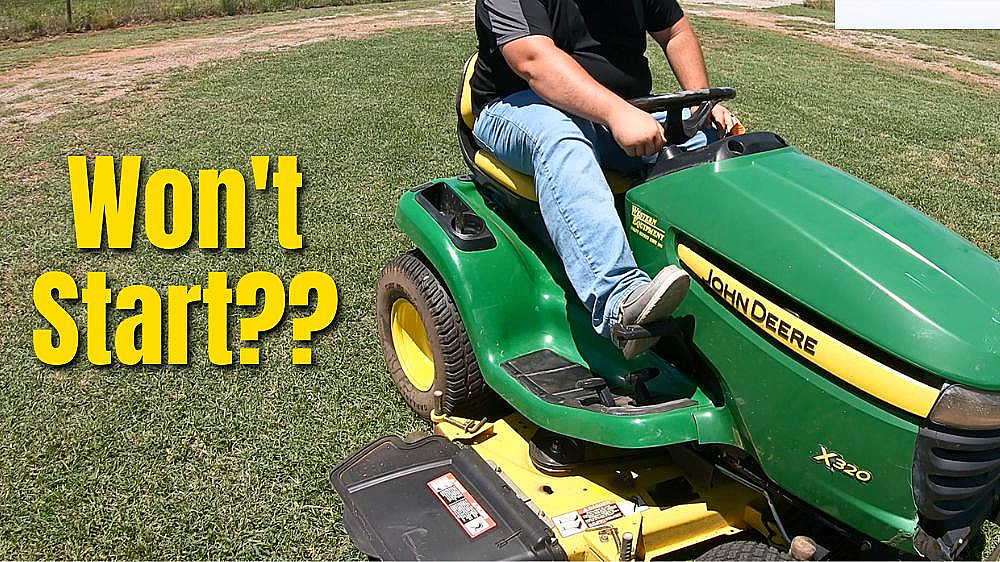
There are few things more frustrating than being ready to tackle an overgrown lawn, only to have your John Deere riding lawn mower refuse to start. While renowned for their reliability and durability, even the best lawn tractors require proper procedure and occasional troubleshooting.
Whether you’re a new owner of an entry-level E series model or maintaining a premium X series workhorse, understanding the correct starting sequence is crucial. This comprehensive guide will walk you through everything from essential pre-start checks and the step-by-step starting procedure for various models to common problems and maintenance tips.
By the end, you’ll have the knowledge to start your John Deere riding mower safely, efficiently, and with confidence every time.
Pre-Start Safety Checks and Preparations
Before you even think about turning the key, a few critical inspections can prevent damage to your equipment and ensure your safety.
Essential Safety Equipment and Precautions
Always wear safety glasses and sturdy, closed-toe shoes when operating your riding mower. Walk the intended mowing area to clear it of debris, toys, rocks, and other obstacles. Ensure no bystanders, especially children and pets, are in the vicinity. Familiarize yourself with the safety guidelines in your specific John Deere operator’s manual—it’s your most valuable resource for safe mowing practices.
Fuel System Inspection
Check the gas tank to ensure you have sufficient, fresh fuel. Gasoline older than 30 days can degrade and cause starting and running issues. Look for any signs of fuel leaks around the tank, fuel lines, or fuel filter. If your model has a fuel shut-off valve, verify it is in the “ON” position to allow fuel flow to the engine.
Oil Level and Fluid Checks
Locate the engine oil dipstick, typically marked with a yellow handle. Remove it, wipe it clean, reinsert it fully, and remove it again to check the level. It should be between the “Full” and “Add” marks. For models with hydrostatic transmissions, check the hydraulic fluid level as per your manual. If you have a liquid-cooled engine, verify the coolant level in the overflow tank when the engine is cool.
Battery and Electrical System
Visually inspect the battery for corrosion on the terminals and ensure connections are tight and clean. A weak or dead 12-volt battery is one of the most common reasons a riding mower won’t start. If the mower has been stored, the battery may need charging. Using a multimeter, a healthy battery should show approximately 12.6 volts or more.
Tire Pressure and Deck Position
Improperly inflated tires can affect mower stability and cutting quality. Check all four tires. Ensure the mower deck is raised to the desired cutting height and that the blades are not obstructed. Finally, test that the parking brake holds securely before starting.
Step-by-Step Starting Procedure for John Deere Riding Mowers
Standard Key Start Models (Most Common)
This procedure applies to the majority of John Deere lawn tractors, including most E, S, and X series models.
Step 1: Seat and Parking Brake
Firmly sit in the operator’s seat. This engages the critical seat safety switch, which prevents starting unless an operator is present. Fully engage the parking brake by pressing the brake pedal down and setting the brake lever.
Step 2: Transmission and Blade Settings
Place the gear shift lever in “Neutral” (N) or set the hydrostatic transmission pedal in the neutral detent. Ensure the Power Take-Off (PTO) switch or lever, which engages the blades, is in the “OFF” or disengaged position.
Step 3: Throttle and Choke Settings
Move the throttle/choke lever to the “Fast” or rabbit symbol position. For a cold engine, pull the choke knob all the way out. If the engine is already warm from recent use, little or no choke is needed.
Step 4: Turning the Ignition Key
Insert the key into the ignition switch. Turn it to the “Start” position (usually past “Run”). Hold it for no more than 5 seconds. Listen for the engine to crank and fire. Once the engine starts, immediately release the key, allowing it to return to the “Run” position.
Step 5: Warm-Up Period
Allow the engine to run at idle for 30 to 60 seconds. If you used the choke, gradually push it in as the engine warms to prevent it from stalling. Use this time to listen for any unusual noises or vibrations.
Electric Start with Push Button (Newer Models)
Some newer John Deere models feature a push-button start. The preparation steps (safety, brake, PTO, throttle) are identical. Instead of turning a key, you simply press and hold the “Start” button on the dashboard until the engine fires, then release it.
Manual/Recoil Start Models (Older or Budget Models)
Older or smaller budget models may have a recoil starter. After completing all safety and preparation checks, turn the ignition key to “On.” Pull the recoil starter handle briskly and smoothly. Do not yank it to its full extension; allow it to rewind gently. Repeat until the engine starts.
Common Starting Problems and Troubleshooting
Engine Won’t Crank or Turn Over
Symptoms: Silence or a single loud “click” when turning the key.
Causes: Dead battery, corroded terminals, faulty ignition switch, or a tripped safety interlock (seat, brake, or PTO switch). A bad starter motor or solenoid can also be the culprit.
Engine Cranks But Won’t Fire
Symptoms: Engine turns over but does not start.
Causes: Often related to fuel or spark. Check for stale fuel, a clogged fuel filter, a faulty fuel pump, or a dirty carburetor. On the spark side, inspect for a fouled or damaged spark plug, or a disconnected spark plug wire.
Engine Starts Then Dies Immediately
Symptoms: The engine fires up but stalls within a few seconds.
Causes: Could be a dirty carburetor jet, a malfunctioning seat safety switch (thinking the operator has left), or severely contaminated fuel.
Hard Starting When Cold
Symptoms: Difficulty starting, especially in cooler weather.
Causes: Improper choke operation, a battery losing strength in the cold, or oil that is too thick. Ensure you are using the choke fully for cold starts.
Hard Starting When Hot
Symptoms: Mower starts fine cold but struggles to restart when the engine is hot.
Causes: Often due to “vapor lock” where fuel vaporizes in the lines, or “heat soak” affecting electrical components. Using fuel with high ethanol content can worsen this.
Maintenance Tips for Reliable Starting
Regular Maintenance Schedule
Adhere to the maintenance schedule in your manual. Key tasks include regular oil changes, air filter cleaning/replacement, and annual fuel filter changes. Sharpen blades monthly during the mowing season and clean the underside of the deck regularly.
Battery Care and Charging
Disconnect and remove the battery for winter storage. Keep it on a maintainer or battery tender. Clean terminals annually with a baking soda solution and a wire brush. Most mower batteries last 3-4 years.
Fuel System Maintenance
For storage over 30 days, add a fuel stabilizer to a full tank or drain the fuel system completely. Replace the in-line fuel filter annually. Consider having the carburetor professionally cleaned every few seasons if you experience persistent fuel issues.
Spark Plug Service
Replace the spark plug annually for best performance. Always check the gap with a feeler gauge before installation (consult your manual for the specification, commonly .030″). A light application of anti-seize compound on the threads is recommended.
Model-Specific Starting Considerations
John Deere E Series (Entry-Level Models)
Models like the E100, E110, E120, and E130 follow the standard key-start procedure. They are simple and reliable, with common issues often tied to basic maintenance items like the battery, spark plug, or safety switches.
John Deere S Series (Mid-Range Models)
The S200 series introduces more features but the starting procedure remains similar. Pay close attention to the hydrostatic transmission pedal; it must be perfectly in neutral for the safety system to allow a start.
John Deere X Series (Premium Models)
The X300, X500, and X700 series offer advanced features like electronic fuel injection (EFI) on some models, which simplifies starting. The X700 series diesel engines require waiting for the glow plug indicator light to go out before starting in cold conditions.
Safety Switches and Interlock Systems
Understanding John Deere Safety Features
John Deere mowers have an interlock system that prevents unsafe operation. The seat switch stops the engine if you leave the seat without the parking brake engaged. The brake switch prevents starting unless the brake is set. The PTO switch prevents starting with the blades engaged. Never attempt to bypass these switches.
Seasonal Starting Tips
Spring Start-Up After Winter Storage
- Remove any protective cover and clean the mower.
- Install a charged battery and tighten connections.
- Check and change the engine oil if needed.
- If you used stabilizer, you can attempt to start. If you drained the system, add fresh gasoline.
- Perform all pre-start checks before the first start of the season.
Fall Preparation for Winter Storage
- Add fuel stabilizer and run the engine for 5 minutes to circulate it, or drain all fuel from the tank and carburetor.
- Change the oil and filter (dirty oil is acidic and can damage the engine over winter).
- Remove the battery and store it on a tender.
- Clean the mower thoroughly, especially the deck.
- Store in a dry, covered location.
When to Call a Professional
Call an authorized John Deere service technician if you encounter: complex electrical issues, internal engine problems (loss of compression, loud knocking), persistent carburetor issues, or hydraulic system failures. If the repair is covered under warranty or requires specialized diagnostic tools, professional service is the best and safest choice.
Frequently Asked Questions
Why won’t my John Deere mower start even with a new battery?
A new battery rules out one cause, but the problem could be a faulty safety switch (seat, brake, PTO), a bad ignition switch, a failed starter solenoid, or a significant fuel delivery issue like a clogged fuel line or faulty pump.
How long should I let my riding mower warm up?
Allow the engine to idle for 30-60 seconds, or until it runs smoothly without the choke. This lets oil circulate and components reach operating temperature, reducing engine wear.
Can I start my John Deere mower without the key?
No. The key is a necessary part of the ignition circuit and a security feature. If lost, you must purchase a replacement ignition switch and key set from a John Deere dealer.
What does it mean if my mower clicks but won’t start?
A single loud click typically points to a bad starter solenoid or a starter motor that has failed. A rapid series of clicks usually indicates a weak or undercharged battery.
Should I use the choke every time I start my mower?
Only use the choke for a cold engine start. If the engine is warm from recent use, starting with little or no choke is necessary to avoid flooding it.
How often should I replace the spark plug?
For reliable starting and optimal performance, replace the spark plug at least once per mowing season, or after every 100 hours of operation.
Can bad gas prevent my John Deere from starting?
Absolutely. Old, degraded, or ethanol-contaminated fuel is a leading cause of starting and performance problems. Always use fresh, clean gasoline with a maximum of 10% ethanol (E10) or less, and consider a stabilizer for any fuel that will sit.
Conclusion
Starting your John Deere riding lawn mower reliably boils down to three pillars: procedure, maintenance, and safety. By following the step-by-step sequence—engaging the parking brake, setting neutral, disengaging the PTO, and using the choke correctly—you set the stage for a successful start.
Coupling this with routine maintenance like battery care, fresh fuel, and timely spark plug changes will ensure your mower is ready when you are. Always respect the built-in safety interlock system; it is there for your protection. For model-specific details, never hesitate to consult your John Deere operator’s manual.
With this knowledge, you’re equipped to keep your lawn tractor running smoothly for seasons to come.