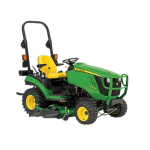

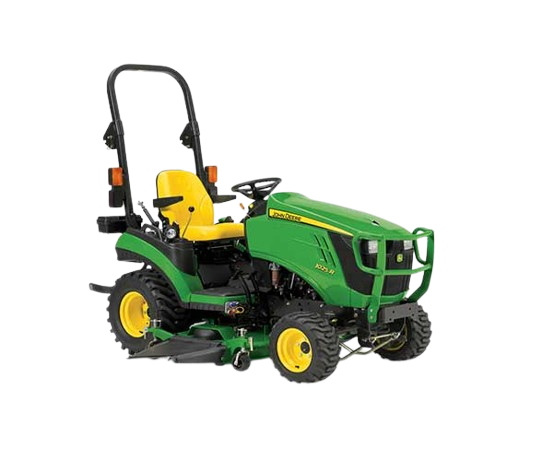

Think of the hardest-working helper you could ever have. Someone who shows up at the first turn of the key, and can switch from mowing your lawn, to digging a trench, to moving a ton of gravel in under ten minutes. That’s not a dream. That’s the John Deere 1025R.
Introduced in 2013 as the flagship of John Deere’s groundbreaking 1 Series, the 1025R redefined what a subcompact tractor could be for homeowners with a few acres and weekend farmers. It’s not just a piece of equipment. It’s a power platform.
Let’s start with the hard numbers that define it:
Engine: 24.2 HP (17.9 kW) liquid-cooled, 3-cylinder diesel.
Weight (approx.): 1,500 lbs (680 kg) for the bare tractor. Be ready to add another 1,000+ lbs with the loader and attachments. (john deere 1025r weight)
Lift capacity loader: 905 lbs (410 kg) to full height. That’s enough for a heavy pallet of pavers or a solid load of firewood. (john deere 1025r lift capacity)
Price (starting, new): Roughly $15,000 – $18,000 USD for the base tractor. A complete setup with loader, backhoe, and mower can easily reach $25,000 – $30,000.
Why does everyone talk about it? Because it’s been the best-selling subcompact tractor in North America for nearly a decade. And the secret isn’t just in the engine. It’s in sheer versatility. The same nimble frame that carries a 4-foot mower deck can, in minutes, be transformed into a winter survival machine with a front-mounted snow blower, or a mini-excavator with a dedicated backhoe.
Forget dry spec sheets. This is a full dissection of the 1025R legend. Learn what its attachments truly deliver, uncover common issues, and see how it stacks up against other John Deere favorites like the heavier 2025R or the more compact 1023E
Ready? Let’s get to it.
What Makes the John Deere 1025R Tick
Before we dive into attachments and real-world jobs, we need to understand the foundation. What are the raw ingredients that make this tractor so capable? This section breaks down the core specs that define the 1025R’s character.
We’re looking beyond the marketing to see what the numbers on the spec sheet, like weight, lift capacity, and horsepower, truly mean for your projects. Think of this as getting to know the machine’s personality and its physical limits before you put it to work.
The Heart of the Machine Engine, Power, and True Weight
Let’s start under the hood. The 1025R isn’t about brute force, but intelligent, reliable power. Its heart is a Yanmar-built, 3-cylinder, liquid-cooled diesel engine. This partnership with Yanmar, a legend in small diesel technology, is a huge part of the tractor’s reputation for reliability.
It delivers 24.2 horsepower (17.9 kW). But in tractors, gross engine horsepower is only part of the story. The number that truly matters is PTO horsepower—the power available at the rear to run attachments like mowers and tillers. The 1025R offers about 19.5 PTO HP, which is the real workhorse number. This is ample to efficiently run a 60-inch mower in tall grass or a rear-mounted snow blower through wet, heavy snow.
Now, let’s talk about heft. A common question is about the John Deere 1025R weight. The tractor’s operating weight, without any attachments, is roughly 1,500 pounds (680 kg). This is a key figure. It gives the machine the traction and stability to work safely on slopes and when using the loader. However, you must always think in terms of total system weight.
Add the quick-attach loader (approximately 500 lbs), a mower deck (another 300+ lbs), and you’re suddenly operating a 2,300+ pound machine. This is crucial for knowing if your trailer can haul it, or how much it will compact your soil.
This combination of a smooth, torquey diesel engine and a substantial, stable weight is what transforms the 1025R from a lawn mower into a genuine compact utility tractor. It has the guts to work hard and the build to handle it.
How Much Can It Really Lift A Look at Loader Capacity
The front loader is perhaps the most-used attachment. So, its strength is a deal-breaker. When we talk about John Deere 1025R lift capacity, we’re usually referring to the loader’s power. The official number is 905 pounds (410 kg) to full height at the pivot pins.
But here’s the real talk. That 905 lbs rating is under ideal, laboratory-like conditions. In the real world, with the bucket extended forward and material that isn’t perfectly balanced, you’ll realistically and safely handle about 600-700 pounds. That’s still a lot! It means you can lift a standard IBC tote full of water, a skid of pavers, or a huge load of firewood.
The key is understanding stability. Lifting a max load feels very different on flat, solid ground versus a slight slope. This is where the tractor’s weight we just discussed becomes your friend. And remember, for handling palletized materials, adding a set of John Deere 1025R pallet forks is a game-changer. They let you lift those loads securely and level, making the most of every pound of that capacity.
The 1 Series Legacy Leading the Subcompact Tractor Class
The 1025R doesn’t exist in a vacuum. It’s the star player in John Deere’s 1 Series lineup, a family of tractors that basically created the modern subcompact tractor market as we know it. Before these machines, your choices were often a lawn tractor that couldn’t do real work, or a massive, expensive agricultural beast.
The 1 Series, and the 1025R as its most popular model, found the sweet spot. It offers three key things that define the class: a rugged diesel engine, a standard quick-attach loader, and a hydrostatic transmission that makes operation intuitive for anyone. This formula lets it compete directly with other premium brands like Kubota’s BX series.
When you choose a 1025R, you’re not just buying a tractor. You’re buying into an ecosystem. It’s the backbone of the subcompact tractor world, with unparalleled dealer support, a vast online community of owners, and that iconic green paint that holds its value year after year. It set the standard, and continues to define what a versatile property machine should be.
Expanding Your 1025R with Essential Attachments
The true magic of the 1025R isn’t just in the tractor itself, it’s in what you can connect to it. This is where a single machine transforms into a fleet. From maintaining your lawn to managing construction projects, the right attachments unlock its full potential. Let’s explore the most popular tools that turn the 1025R into your ultimate property helper.
Finding the Right Mower Deck for Your Lawn
For many owners, the primary job is mowing. The John Deere 1025R mower deck isn’t an afterthought; it’s a finely tuned cutting system designed specifically for this tractor. You typically have a choice between two sizes: the nimble 54-inch (1.37 m) deck and the wider 60-inch (1.52 m) deck.
The 54-inch model is a fantastic all-around choice. It’s easier to maneuver around tight trees and garden beds, and it requires slightly less power, leaving more PTO horsepower for challenging, thick grass. The 60-inch deck covers more ground faster, perfect for larger, open areas. Remember, a wider deck sticks out beyond the tractor’s wheels, so you need to be mindful of obstacles.
Both decks are mid-mount mowers (MMM), meaning they attach under the tractor’s belly for a stable, even cut. The quick-attach system is a highlight—you can drive on and off the deck in minutes without tools, making the switch from mowing to loader work a simple, seasonal routine.
Turning Your Tractor into a Winter Beast with the Snow Blower
When winter hits, the 1025R doesn’t hibernate. With a front-mounted snow blower, it becomes the most powerful snow removal tool you’ll likely ever own. We’re talking about clearing a long, snow-packed driveway in minutes, not hours with a walk-behind machine.
The John Deere 1025R snow blower attachment is a two-stage beast, usually available in a 54-inch width. It uses the tractor’s PTO power to throw snow far and wide. The beauty of the front-mount setup is that you still have the rear of the tractor free. This means you can add rear wheel weights for incredible traction, or even keep a rear blade on to scrape down to the pavement after the blower passes.
Using the JD 1025R snowblower is a game-changer. You sit in a warm cab (if you have the optional cab), protected from the elements, and power through drifts that would stall a pickup truck. It turns a chore into a demonstration of pure machine capability.
Digging Deep The Power of the 1025R Backhoe Attachment
For serious digging tasks like planting trees, installing drainage, trenching for utilities, you need the 1025R John Deere backhoe. This isn’t a toy; it’s a dedicated, frame-mounted excavation tool that gives this compact tractor capabilities you’d expect from a much larger machine.
The backhoe, often the 260 model for the 1025R, provides a digging depth of around 8 feet (2.44 meters) and substantial breakout force. The key term is “frame-mounted.” Unlike lighter, less effective three-point hitch backhoes, this one bolts directly to the tractor’s main frame. This creates a rigid, powerful connection that allows you to dig effectively without shaking the tractor apart.
Operating it requires some practice, but it’s incredibly rewarding. You can precisely shape a landscape, remove stubborn stumps, or dig a foundation for a shed. While it’s one of the more expensive attachments, for anyone with ongoing property projects, the 1025r backhoe quickly proves its worth by saving your back and countless hours of manual labor.
Putting the Deere 1025R to Work Real-World Performance
Specs on paper are one thing. But how does the 1025R feel when the rubber meets the dirt? This section moves from theory to practice, looking at how the tractor handles common property tasks. We’ll see where it shines and, just as honestly, where you might need to adjust your expectations or technique.
Is This the Right Tractor for Your Property Size?
The 1025R is a champion of properties in the 2 to 10-acre range. On a couple of acres, it’s an all-in-one powerhouse for mowing, landscaping, and odd jobs. As you approach 10 acres, it becomes a incredibly versatile tool for specific projects—like clearing land, maintaining long driveways, or building fences—even if you might use a larger machine for broad-scale field work.
If your main task is mowing 5+ acres of flat lawn weekly, the 1025R with a 60-inch deck is efficient and comfortable. For smaller, intricate properties with lots of obstacles, its nimble size is a major advantage over bigger tractors. The real question is about the type of work, not just the acreage.
If your list includes digging, moving heavy materials, and clearing snow, the 1025R is likely a perfect fit. For a deeper comparison on making this choice, our buyer’s guide breaks down the decision process step by step.
Clearing Snow Like a Pro with the 1025R Snow Blower
Using the snow blower attachment transforms a winter chore. The experience is about power and control. The hydrostatic transmission lets you inch forward into heavy drifts at just the right speed, while the blower chews through and throws snow 20+ feet away. It’s vastly more efficient than a plow truck for deep snow, as it removes the snow entirely instead of piling it higher.
The key to success is traction. On icy surfaces or steep driveways, the tractor’s natural weight might not be enough. This is where adding rear tire chains or cast-iron wheel weights becomes essential. Pairing the blower with a rear scraper blade is also a pro-move: use the blower for the bulk removal, then drop the blade to scrape the last inch down to bare pavement. For a full list of compatible winter gear and setup tips, check our detailed specifications and attachments page.
Moving Heavy Loads with Ease Using the Loader and Forks
This is where the 1025R pays for itself in saved time and labor. The loader is intuitive: twin joystick controls next to your right hand manage both the lift/curl and the tractor’s direction. Moving a pile of gravel, topsoil, or mulch becomes a quick, seated operation.
Adding pallet forks unlocks another level of utility. Suddenly, you can unload skids of block from a delivery truck, reposition large potted plants, or organize bulky items in your barn. Remember the lift capacity we discussed? With forks, you can safely carry those small tractors with buckets of material with precision. The secret is to keep loads low and balanced while moving.
For those considering even heavier material handling, it’s interesting to see how the 1025R’s design evolved from older workhorses. While it’s in a different league, the philosophy of versatile utility traces back to legends like the John Deere 4020, a tractor that defined reliability for an entire generation. The 1025R brings that same “do-anything” spirit to a smaller scale.
Owning a 1025R Maintenance, Value, and Smart Choices
Buying the tractor is just the beginning. The real story is in owning it. This section covers what it means to live with a 1025R long-term—from the simple routines that keep it running smoothly, to understanding its value over time, and finally, a balanced look at its strengths and weaknesses. This is the honest advice current and future owners need.
Keeping It Running Oil Changes, Filters, and Routine Care
The 1025R is built to be reliable, but like any precision machine, it thrives on regular care. The maintenance schedule is straightforward. The first major service is at 50 hours, followed by intervals every 200 hours. This involves changing the engine oil, hydraulic fluid, and all filters.
Speaking of filters, knowing your John Deere 1025R oil filter part number (often TY22059) is handy, but buying genuine John Deere or high-quality aftermarket filters from your dealer is the real key. They protect that valuable Yanmar engine. Beyond fluids, daily checks include tire pressure, coolant levels, and ensuring the radiator screen is clean, a surprisingly common culprit for overheating when mowing in tall grass.
Staying on top of this schedule is the single best way to prevent issues. It’s simple, but neglect here is the root cause of most problems. For a complete breakdown of the service schedule, fluid types, and part numbers, we’ve compiled everything on our dedicated 1025R specifications and maintenance page.
Understanding Your Investment Price and Long-Term Value
Let’s talk numbers. A new 1025R package with a loader and mower deck starts in the $20,000 – $25,000 USD range. Add a backhoe, and you can approach $30,000. It’s a significant investment.
However, the John Deere 1 Series holds its value exceptionally well. A clean, low-hour used 1025R often sells for only 15-25% less than its original price after several years. This strong resale is a testament to its reputation and demand. When comparing, remember you’re not just buying metal; you’re buying into John Deere’s extensive dealer network for parts and service, and a massive community of owners for support.
Is it worth it? If your property generates 100+ hours of work for it each year, the answer is almost certainly yes. It replaces hiring out jobs, renting equipment, and back-breaking labor. To help you crunch the numbers for your specific situation, our buyer’s guide includes a cost-benefit worksheet.
The Honest Pros and Cons of John Deere 1025R Ownership
No machine is perfect. Being honest about the trade-offs helps you buy with confidence and avoid frustration later.
The Pros (Where It Shines):
Unmatched versatility: the sheer range of compatible attachments is its superpower.
Dealer support: the John Deere network is vast and professional.
Ease of use: the hydrostatic transmission and intuitive controls have a shallow learning curve.
Build quality: it feels solid and is generally reliable with proper care.
The Cons (Things to Know):
Size limitations: It’s not a full-size tractor. Pushing its limits on lift or traction is easy to do.
Known quirks: Like any model, it has some common wear points. Some owners report occasional issues with the mower deck drive belt or the seat safety switch. Being aware of these lets you catch them early.
Cost of attachments: The tractor is just the entry fee. Factory attachments are high-quality but expensive.
For a deep dive into these potential issues, including symptoms, fixes, and how to prevent them, we have a comprehensive resource covering common John Deere 1025R problems and solutions. Knowing them makes you a smarter owner.
Don’t just take our specs at face value. For a first-hand ownership perspective, don’t miss this honest review from the YouTube channel Van Wall. In his video “John Deere 1025R Review“, he shares his practical experience, the strengths and weaknesses uncovered after three years of hard use. It’s a fantastic resource to complete the picture.
Final Verdict: Who Should Buy the John Deere 1025R?
After peeling back the layers on specs, attachments, and real-world performance, the big picture comes into focus. The John Deere 1025R isn’t for everyone, but for its target owner, it is nearly irreplaceable. This final section aims to match the machine with the person, helping you see clearly if you’re looking at a tractor or a lifelong partner for your property.
The Ideal Owner Profile for This Compact Tractor
Close your eyes and picture this person. They likely own 3 to 10 acres of land—a mix of lawn, garden, woods, and maybe a paddock. Their to-do list is diverse and never-ending: mow the fields, clear the winter snow, spread gravel on the driveway, dig holes for new trees, move hay bales, and build a shed. They value their time and their back, and they get satisfaction from tackling projects themselves with the right tool.
If that sounds familiar, the 1025R is your tool. It’s ideal for the hands-on homeowner, the hobby farmer, or the small-scale landscaper who needs one machine to wear a dozen different hats. It’s less ideal for someone who only needs to mow a flat acre (a zero-turn is better) or someone farming 50+ acres of row crops (you need something much larger).
Our Final Recommendations and Your Next Steps
So, what’s the bottom line? The John Deere 1025R earns its reputation as the king of the subcompact category. It’s a polished, capable, and incredibly versatile system backed by top-tier support. You pay a premium for the green paint, but you get reliability, resale value, and a seamless attachment ecosystem in return.
Your next moves:
- Get hands-on: Nothing replaces seat time. Visit your local John Deere dealer for a test drive. Operate the loader, feel the hydrostatic pedal, and ask questions.
- Plan your package: Think seriously about which attachments you’ll need from day one (loader and mower are essentials for most) and which can come later (backhoe, snow blower).
- Do your homework: Use the resources we’ve built for you. Compare specs in detail, study the common issues to be a prepared owner, and walk through the financials with our buyer’s guide.
- Consider the landscape: Look at competitive models from Kubota, Massey Ferguson, and others. Compare not just price, but dealer proximity, felt ergonomics, and included features.
The journey to owning a tractor is a big decision. We hope this ultimate guide has given you the clarity and depth of information you needed. Whether you choose the Deere 1025R or another model, you’re now equipped with the right questions to ask. Good luck, and happy tractoring!