

If you’re hearing unusual sounds coming from your John Deere equipment, you’re not alone. Transmission noise is one of the most common concerns among tractor and mower owners—and it can range from completely normal to a sign of serious internal damage.
Whether it’s a whining, grinding, humming, or clicking sound, understanding what your machine is trying to tell you is critical. Ignoring transmission noise can lead to costly repairs, reduced performance, and even total transmission failure.
In this guide, we’ll break down:
- The most common types of John Deere transmission noise
- What causes them
- How to diagnose the issue step by step
- Practical fixes (from simple to advanced)
- When you should stop using your machine immediately
- Common Types of Transmission Noise
Common Types of Transmission Noise
Not all noises are created equal. Some are completely normal — especially in hydrostatic systems — while others are red flags.
Whining Noise
A high-pitched whining sound is the most frequently reported issue.
This is especially common in hydrostatic transmission models like the John Deere 1025R.
Possible causes:
- Hydraulic fluid under pressure
- Air trapped in the system
- Low or degraded transmission fluid
👉 Important: A light whine during operation is often normal. A loud or increasing whine is not.
Grinding Noise
Grinding is a serious warning sign.
If you hear a metal-on-metal grinding sound, it usually indicates:
- Worn gears
- Damaged bearings
- Internal transmission failure
👉 This is NOT normal and requires immediate attention.
Humming or Buzzing
A low humming or buzzing sound is often overlooked.
In many cases:
- It’s normal during steady operation
- It becomes problematic if it suddenly changes in pitch or intensity
Hydrostatic transmissions naturally produce this type of sound under load.
Clicking or Knocking
Clicking or knocking sounds can indicate:
- Loose components
- Worn linkage parts
- Internal damage in more severe cases
👉 Intermittent clicking might be minor. Constant knocking is not.
What Causes Transmission Noise in John Deere Equipment?
Understanding the root cause is key to fixing the issue efficiently.
Low or Dirty Transmission Fluid
This is the #1 cause of transmission noise.
When fluid is:
Low → increased friction
Dirty → poor lubrication and contamination
You may hear:
- Whining
- Humming
- Grinding (in severe cases)
- Worn Bearings or Gears
Over time, internal components wear down.
This leads to:
- Increased friction
- Irregular movement
- Metal contact
Result: grinding or knocking sounds
Air in the Hydraulic System
Air bubbles in the system disrupt pressure flow.
Symptoms:
- Whining noise
- Jerky movement
- Delayed response
- Loose or Misaligned Components
Sometimes the issue isn’t internal.
Loose: mounts, linkages, and external drivetrain parts can create noises that mimic transmission problems.
Normal Operational Noise
This is where many users get confused.
Machines like John Deere 1025R or John Deere 3038E use hydrostatic transmissions, which naturally produce a whining or humming sound.
👉 Key insight: if the noise is consistent and hasn’t changed over time, it’s likely normal.
How to Diagnose John Deere Transmission Noise (Step-by-Step)
A systematic approach saves time and money.
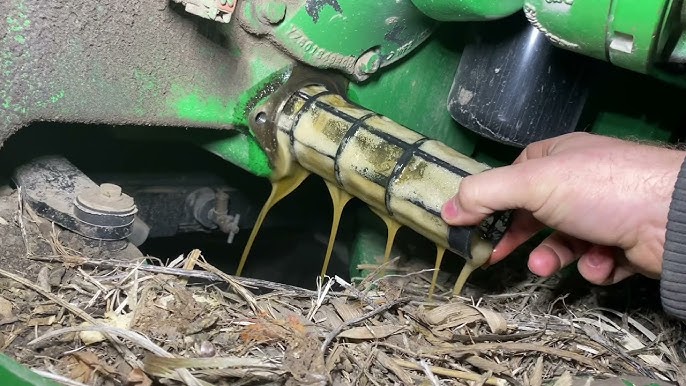
1. Check Transmission Fluid
– Verify level
– Inspect color (should not be dark or milky)
– Look for debris
If in doubt, replace it.
2. Inspect for Leaks
Look under the machine:
- Oil spots
- Wet components
- Damaged seals
3. Listen in Different Conditions
Operate the machine and observe:
- Idle vs acceleration
- Under load vs no load
- Cold vs warm engine
👉 Noise behavior gives clues about the issue.
4. Test Hydrostatic Response
Is movement smooth?
Any delay or hesitation?
Problems here often point to hydraulic issues.
5. Inspect External Components
Check:
- Driveshafts
- Belts (especially in lawn tractors like John Deere S120)
- Mounting hardware
How to Fix John Deere Transmission Noise
Now the practical part.
Change Transmission Fluid and Filter
This solves a large percentage of cases.
Benefits:
Restores lubrication
Removes contaminants
Improves pressure consistency
Bleed the Hydraulic System
If air is present:
Run the system through cycles
Follow manufacturer bleeding procedures
Replace Worn Components
If damage is confirmed:
Bearings
Gears
Seals
This may require professional service.
Tighten and Adjust Components
Simple but often overlooked:
Tighten mounts
Adjust linkages
Seek Professional Service
If you notice:
Grinding
Loss of power
Sudden noise increase
…don’t delay.
Cost of Repairs
Here’s what you can expect:
Fluid change: $50 – $150
Minor repairs: $150 – $500
Bearing replacement: $200 – $800
Full rebuild: $1000+
Early intervention = lower cost.
Preventing Transmission Noise
Prevention is always cheaper than repair.
Follow a Maintenance Schedule
Regular:
Fluid changes
Filter replacements
Use the Correct Fluid
Always use manufacturer-recommended oil.
Incorrect fluid = poor performance + noise.
Avoid Overloading
Pushing your machine beyond limits accelerates wear.
Warm Up the Machine
Especially in cold conditions:
- Let fluids circulate
- Reduce stress on components
Model-Specific Notes
Some models are known for certain noise characteristics:
John Deere 1025R → Common hydrostatic whining
John Deere S120 → Noise often confused with belt issues
John Deere 3038E → Hydraulic noise under load
When to Stop Using the Machine Immediately
Stop operation if you notice:
- Loud grinding
- Burning smell
- Sudden loss of movement
- Rapid increase in noise
Continuing use can destroy the transmission completely.
Conclusion
Transmission noise in John Deere equipment isn’t something you should ignore—but it’s also not always a reason to panic.
Many sounds, especially in hydrostatic systems, are completely normal. The key is recognizing the difference between expected operational noise and early warning signs of failure.
By checking fluid levels, monitoring changes in sound, and performing regular maintenance, you can prevent minor issues from turning into expensive repairs.
If in doubt, act early. A simple fix today can save you thousands tomorrow.