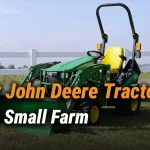


When you’re shopping for a compact tractor on a budget, the John Deere 3025E keeps coming up in conversations. It’s the entry point into John Deere’s 3 Series lineup, and it promises to deliver that legendary green-and-yellow quality without completely emptying your wallet.
- Introduction to the John Deere 3025E
- What Makes the John Deere 3025E Different?
- What the John Deere 3025E Does Best
- What the John Deere 3025E Doesn’t Do Well
- Real-World Performance and Use Cases
- Ownership Costs and Value Analysis
- Who Should Buy the John Deere 3025E?
- The Verdict: Is the 3025E the Best Budget Compact Tractor?
But can an “economy” tractor really hold up to the John Deere name? And more importantly, is it the right choice for your property?I’ve spent considerable time researching the 3025E, talking to owners, and digging into what makes this tractor tick.
This isn’t just another spec sheet regurgitation, this is a real-world look at what the 3025E does well, where it falls short, and who should seriously consider buying one.
Introduction to the John Deere 3025E
What It Is and Who It’s For
The John Deere 3025E is the economy model in the company’s 3 Series compact utility tractor lineup. With 24.7 horsepower from a three-cylinder diesel engine, it sits in that sweet spot between sub-compact tractors and full-sized utility machines.
This tractor was designed specifically for budget-conscious buyers who still want reliable John Deere engineering backing their investment.The typical 3025E owner is someone managing a small farm, maintaining a larger rural property, or running a part-time landscaping operation.
We’re talking about folks with 5 to 20 acres who need real capability but can’t justify spending $30,000 or more on premium models. First-time tractor buyers are particularly drawn to the 3025E because it offers an accessible entry point into serious equipment ownership.
What makes the 3025E particularly appealing is its straightforward nature. There’s no complexity here—no electronic controls to troubleshoot, no sophisticated systems that require dealer diagnostics. It’s a tractor that does what tractors have always done, just with modern reliability and efficiency.
Where It Fits in the John Deere Lineup
Understanding where the 3025E sits in John Deere’s hierarchy helps clarify what you’re actually buying. The 1 Series represents the sub-compact category, great for homeowners with a few acres but limited in serious farm work capability. The 2 Series steps up with premium features and refined operation, but commands a significantly higher price.The 3 Series bridges the gap between hobbyist equipment and commercial-grade machinery.
Within the 3 Series itself, the 3025E is the starting point. Above it, you’ll find the 3032E with more power and the 3046R with nearly double the horsepower and substantially more capability. But all of those models cost considerably more.
This positioning matters because the 3025E gives you access to the 3 Series frame, build quality, and attachment ecosystem at the lowest possible price. You’re not buying a different class of tractor—you’re buying the economy version of a legitimate utility tractor.
Why the 3025E Appeals to Budget Buyers
Let’s be honest about what “budget” means here. The 3025E isn’t cheap in absolute terms, you’re still looking at a significant investment. But compared to other options in the compact utility category, especially those wearing the John Deere badge, it represents substantial savings.
The appeal goes beyond just the lower sticker price. Many buyers are drawn to the 3025E because they recognize the John Deere dealer network advantage. When something breaks at 7 PM on a Saturday, there’s comfort in knowing parts are readily available and mechanics understand your equipment. That support infrastructure has real value, especially for buyers who aren’t mechanically inclined.
There’s also an element of brand confidence at play. John Deere’s reputation wasn’t built on cheap tractors, and buyers betting on the 3025E are wagering that even the economy model maintains those quality standards where it truly matters—in the drivetrain, frame, and core mechanical components.
What Makes the John Deere 3025E Different?
Economy Features That Still Deliver
The 3025E achieves its lower price point through strategic simplification rather than wholesale cheapening. The most obvious difference is the open operator station. There’s no cab option available on this model, which immediately saves thousands of dollars but also means you’re exposed to weather, dust, and noise. For many buyers doing occasional weekend work, this trade-off makes perfect sense.
The controls are manual and mechanical rather than electronic. Your hydraulic levers are connected directly to valves through linkages, not servo motors controlled by a computer. Some people actually prefer this—there’s immediate feedback, nothing to short circuit, and troubleshooting is straightforward. Others miss the precision and ease of electronic controls, especially when operating attachments.
The hydraulic system is simpler with lower flow rates compared to premium models. This doesn’t mean it’s inadequate—it means you need to be realistic about what implements you’re running and how quickly they’ll operate. A basic box blade or rotary cutter works fine. Trying to run a high-demand hydraulic implement designed for bigger tractors will leave you frustrated.
Build Quality vs Price Point
Here’s where things get interesting. John Deere didn’t cheap out on the fundamental structure of the 3025E. The frame, axles, and core drivetrain components are robust and well-engineered. These are the parts that determine whether a tractor lasts 500 hours or 5,000 hours, and John Deere maintained their standards here.
The cost savings show up in the finishing details and convenience features. The seat is basic but functional. The operator platform is utilitarian. The paint job and trim pieces aren’t quite as refined as what you’d find on a 2 Series or higher-end 3 Series model. The gauge cluster is simpler, the decals are less elaborate, and the overall fit and finish reflects the economy positioning.
Does this matter? That depends entirely on your priorities. If you’re primarily concerned with getting work done reliably for years to come, the 3025E’s build quality is more than adequate. If you want your tractor to feel premium every time you climb aboard, you’ll notice the differences.
Power and Capability Overview
The 24.7 horsepower rating tells only part of the story. What matters more is how that power translates to real work capability, and here the 3025E performs better than its modest specs might suggest. The three-cylinder diesel engine delivers solid low-end torque, which is exactly what you need for ground-engaging implements and loader work.
The Category 1 three-point hitch can lift approximately 1,100 pounds, which handles the vast majority of implements that make sense for a tractor this size. You’re not going to be pulling massive five-bottom plows, but you never intended to anyway. For box blades, tillers, landscape rakes, and similar implements, the lifting capacity is sufficient.
PTO power, the power available to run implements like mowers and tillers—comes in at around 18 horsepower. This is adequate for a 5-foot rotary cutter or a 6-foot finish mower in normal conditions. Push into really thick, tall grass or try to till compacted soil, and you’ll notice the limitations. The tractor will do the work, but you’ll need patience and multiple passes.
What the John Deere 3025E Does Best
Exceptional Value for Money
When you stack the 3025E against competitors in the same price range, the value proposition becomes clear. You’re getting John Deere’s dealer network, parts availability, and brand reputation at a price point that’s competitive with lesser-known brands. For many buyers, that peace of mind alone justifies any small premium over off-brand alternatives.
The features you do get are well-executed. The hydrostatic transmission provides smooth, easy operation without any clutching or gear shifting. The four-wheel drive system delivers excellent traction when conditions get challenging. The loader—if you opt for one—is well-integrated and surprisingly capable for the tractor’s size.
Long-term ownership costs favor the 3025E as well. Fuel consumption is modest, typically running between 1.5 to 2 gallons per hour under normal working conditions. Maintenance requirements are straightforward with long service intervals. And because it’s a mechanically simple tractor, there’s less to go wrong and repairs tend to be less expensive when they are needed.
Versatile Performance for Small Farms
The 3025E shines brightest when matched with appropriate property sizes and tasks. On 5 to 20 acres, this tractor can handle the full range of typical farm and land management work. Mowing pastures, maintaining gravel driveways, preparing garden beds, moving materials with a loader, and maintaining fence lines all fall well within its capabilities.
For hobby farmers and homesteaders, the 3025E provides legitimate agricultural capability. It’ll turn over a garden plot with a tiller, pull a small disc harrow to prepare seed beds, and handle a hay spear to move round bales. It won’t do these tasks as quickly as a larger tractor, but it will do them reliably season after season.
The attachment ecosystem available for the 3 Series is extensive. Everything from rotary cutters to post hole diggers to landscape rakes bolts right up. This versatility means your initial tractor investment continues to deliver value as your needs evolve and you add implements over time.
Reliable John Deere Engineering
Strip away the economy positioning and marketing talk, and you’re left with fundamental engineering that John Deere has refined over decades. The powertrain is proven, the hydraulics are straightforward, and the overall design prioritizes longevity over flash.
Maintenance is genuinely simple on the 3025E. Oil changes, filter replacements, and greasing are all accessible without special tools or dealer-only procedures. The engine air filter is right there in plain sight. The fuel filter is easy to reach. Everything about the tractor’s design suggests that John Deere expects owners to handle routine maintenance themselves.
Parts availability deserves specific mention because it directly impacts long-term ownership satisfaction. John Deere dealers stock common maintenance items, and even obscure parts can typically be sourced within a day or two. Compare this to some imported brands where a failed hydraulic pump might mean weeks of downtime waiting for a container ship, and the value becomes apparent.
What the John Deere 3025E Doesn’t Do Well
Limited Comfort and Convenience Features
Let’s not sugarcoat this—spending long days on a 3025E is not a luxury experience. The open operator station means you’re fully exposed to sun, wind, rain, and cold. On a pleasant spring morning, this is actually nice. On a 95-degree July afternoon or during winter snow removal, it gets old quickly.
The seat is functional but basic. It has some cushioning and basic suspension, but it’s not the plush, adjustable seat you’d find on premium models. After a few hours of operation, especially on rough terrain, you’ll feel it. The operator platform offers decent legroom but lacks the refined ergonomics of higher-tier tractors.
There’s no easy solution to these limitations because a cab simply isn’t available for the 3025E. You can add a ROPS canopy for sun and light rain protection, but it doesn’t provide weather sealing or heat in winter. If operator comfort ranks high on your priority list, you need to either accept these limitations or spend more on a different model.
Lower Hydraulic Flow and Lift Capacity
The hydraulic system on the 3025E is adequate for basic implements but noticeably limited compared to premium models. Hydraulic flow rates are lower, which means hydraulically-powered implements operate more slowly. A hydraulic log splitter will cycle more slowly. A hydraulic post hole digger will penetrate more deliberately.
The three-point hitch lift capacity of around 1,100 pounds sounds reasonable until you start researching heavier implements. A substantial box blade filled with gravel for driveway work might push or exceed this limit. A large rotary tiller designed for bigger tractors won’t lift. You’re constrained to implements appropriately sized for the tractor’s capability.
These aren’t defects—they’re design parameters based on the tractor’s price point and target use cases. But they represent real limitations that you’ll encounter if you try to push the 3025E beyond its intended scope. Understanding these boundaries before purchase prevents disappointment later.
Resale Value Concerns
Here’s an uncomfortable truth about economy models: they typically depreciate faster than premium equipment. The 3025E will hold value reasonably well because it wears the John Deere badge, but it won’t command the same resale percentages as a loaded 2025R or 3046R.
The used tractor market shows clear preference for higher-specification models. Buyers shopping used often figure if they’re spending significant money anyway, they might as well stretch for more features and capability. This leaves economy models competing primarily on price, which drives down resale values.
This matters if you view your tractor as an investment you’ll eventually recoup through resale. If you plan to keep the tractor for 10-15 years and run it into the ground, depreciation curves become largely irrelevant. But if you like upgrading equipment every few years, be aware that the 3025E’s resale value won’t be as strong as models with more features and power.
Real-World Performance and Use Cases
Small Farm and Homestead Operations
The 3025E has found its sweet spot among small-scale farmers and serious homesteaders. These are folks growing vegetables for market, maintaining orchards, managing small livestock operations, or pursuing food self-sufficiency. The tractor provides enough capability to handle real agricultural work without the operating costs and complexity of larger equipment.
Garden preparation is where many 3025E owners spend significant time. A rotary tiller attachment makes quick work of preparing beds, and the tractor’s size allows maneuvering in relatively confined spaces. The loader proves invaluable for moving compost, spreading mulch, and handling bags of feed or fertilizer. The three-point hitch accommodates cultivators, seeders, and other garden implements.
For livestock operations, the 3025E handles the support work admirably. Moving round bales with a spear, scraping barn floors with a box blade, spreading bedding materials, and maintaining pastures with a rotary cutter all fall within its wheelhouse. It’s not going to replace a dedicated hay tractor on a 200-acre cattle operation, but for 10-20 acres with a dozen head, it’s plenty.
Light Commercial and Landscaping Work
Some landscaping professionals and part-time contractors run 3025E tractors, though this pushes into the upper limits of what the tractor was designed for. The key word here is “light” commercial work. If you’re doing weekend side jobs, maintaining a few properties, or running a small landscaping operation where the tractor isn’t running eight hours daily, the 3025E can work.
Material handling with the loader is the most common commercial application. Moving pallets of sod, relocating piles of mulch or topsoil, and transporting hardscape materials are all tasks the 3025E handles well. The loader capacity isn’t huge, but it’s sufficient for these applications, and the compact size allows access that larger equipment can’t match.
The limitations appear when you run the tractor hard day after day. It wasn’t engineered for daily commercial abuse the way heavy-duty models were. Hours accumulate quickly under commercial use, and while the 3025E is reliable, you’re accelerating toward maintenance intervals and eventual component wear. Many professional contractors conclude that stepping up to more robust equipment makes financial sense for full-time commercial work.
Seasonal Work and Attachment Performance
Many 3025E owners use their tractors seasonally, and this usage pattern plays to the tractor’s strengths. Spring brings garden preparation and property cleanup. Summer means mowing and general maintenance. Fall involves moving firewood and preparing for winter. Winter brings snow removal in northern climates.
Mowing performance is solid within appropriate parameters. A 5-foot rotary cutter handles pasture mowing and brush cutting effectively. A 6-foot finish mower works well for lawns and maintained areas, though you’ll need to slow down in thick, tall grass. The key is matching your mowing implement to the tractor’s power and not expecting miracles in extreme conditions.
Snow removal capability depends heavily on your attachment choice. A front blade works adequately for light to moderate snow but struggles in deep, heavy accumulations. A rear-mounted snow blower provides more capacity but comes at substantial additional cost. The 3025E has enough power and traction for residential snow removal but isn’t ideal for clearing large commercial parking lots.
Ownership Costs and Value Analysis
Purchase Price vs Long-Term Investment
The starting price for a bare-bones 3025E typically runs between $16,000 and $20,000, depending on your dealer and current promotions. That’s just the tractor though—most buyers add a loader (another $3,000-$4,000) and mower deck (another $2,000-$3,500). A practical, ready-to-work package usually lands between $22,000 and $27,000.
Compare this to a John Deere 2025R with similar attachments at $27,000-$33,000, or a loaded 3046R pushing past $35,000, and the savings become substantial. For buyers where that $5,000-$10,000 difference represents a significant portion of their equipment budget, the 3025E makes economic sense.
The long-term investment picture depends heavily on your usage patterns. If you’re running 50-100 hours annually doing routine property maintenance, the 3025E should provide 15-20 years of service with proper maintenance. That works out to very reasonable annual ownership costs. If you’re running 300+ hours yearly doing heavy work, the economics shift toward models designed for that intensity.
Maintenance and Reliability Expectations
Routine maintenance on the 3025E is straightforward and affordable. Engine oil changes are recommended every 200 hours or annually. Hydraulic filter changes happen every 400 hours. Fuel filters should be changed annually. Transmission fluid service is required every 600 hours. For typical homeowner use of 50-75 hours annually, you’re looking at mostly annual service intervals.
Parts costs are reasonable by John Deere standards. An oil change with filter runs about $75-$100 if you do it yourself, $150-$200 at a dealer. Hydraulic filters cost $30-$50. Fuel filters run $20-$30. These aren’t cheap compared to changing oil in your truck, but they’re not exorbitant for tractor maintenance.
Reliability has proven solid based on owner feedback. The mechanical simplicity of the 3025E means fewer electronic gremlins to troubleshoot. The Yanmar-built engine is proven and robust. Most reported issues involve minor annoyances rather than catastrophic failures. Expect the occasional hydraulic leak, maybe a loose electrical connection, but not fundamental drivetrain problems.
When the 3025E Makes Financial Sense
The financial case for the 3025E is strongest when you’re primarily concerned with capability per dollar spent. If you need legitimate tractor functionality but can’t justify premium pricing, the 3025E delivers the core capabilities at accessible cost.
Consider a typical buyer scenario: managing 10 acres with gardens, pastures, and wooded areas. Work includes mowing, tilling, moving materials, maintaining trails, and occasional snow removal. Usage averages 60 hours annually. In this scenario, the 3025E provides all necessary capability while leaving budget available for implements and other equipment.
The math changes if you’re farming commercially or running high-hour operations. Divide the purchase price by expected lifetime hours, and commercial users quickly realize that spending more upfront for greater capability and longer service life actually costs less per hour of operation. The 3025E is an excellent value for moderate use, but it’s not the most economical choice for intensive work.
Who Should Buy the John Deere 3025E?
Perfect Buyer Profile
The ideal 3025E buyer manages 5 to 15 acres with diverse needs that require real tractor capability. They’re budget-conscious but not willing to compromise on reliability and support. They value the John Deere dealer network and parts availability over cutting-edge features or maximum comfort.
Many perfect-fit buyers are purchasing their first tractor and want something they can grow with as they learn what they actually need. The 3025E provides enough capability to handle most common tasks without overwhelming new operators with complexity. The manual controls and mechanical systems are intuitive and forgiving.
Semi-retired folks maintaining rural properties, young families establishing homesteads, and part-time farmers supplementing other income often find the 3025E hits their sweet spot. They need reliable equipment but use it intermittently rather than full-time. The occasional discomfort of an open station is acceptable given the cost savings.
When to Choose the 3025E Over Alternatives
If your budget caps out around $25,000 for a ready-to-work tractor package, the 3025E likely represents the best John Deere option available. The alternative is stepping down to 1 Series or 2 Series models that cost similar money but offer less capability and limit your implement options.
The 3025E makes particular sense when you prioritize mechanical simplicity and ease of maintenance. If you prefer turning a wrench yourself rather than calling the dealer for diagnostic software, the straightforward design appeals. There’s no computer to confuse, no DPF to regenerate, no DEF to monitor—just a simple diesel tractor.
For buyers who need loader capacity and three-point capability but don’t require speed or comfort, the 3025E delivers where it counts. A landscaper moving materials doesn’t care about cab air conditioning. A gardener preparing beds isn’t concerned with plush seating. Match your priorities to what the tractor delivers, and it’s an excellent choice.
When to Look Elsewhere
If operator comfort ranks high on your priority list, you should honestly consider spending more for a model offering a cab option. Long days on a tractor in bad weather or extreme temperatures aren’t just uncomfortable—they’re potentially dangerous. Heat exhaustion and hypothermia are real risks that comfort features help mitigate.
Heavy commercial users should step up to more robust equipment. The 3025E will survive commercial use, but you’ll accelerate through its service life and potentially face more frequent repairs. Models in the 4 Series range are engineered for daily commercial operation and will prove more economical over their lifetime despite higher purchase prices.
If your property exceeds 20 acres or involves truly heavy ground-engaging work, you need more power. Trying to till compacted soil, pull heavy implements, or clear serious brush with a 3025E leads to frustration and potentially shortened equipment life. Better to buy adequate power upfront than constantly push undersized equipment.
The Verdict: Is the 3025E the Best Budget Compact Tractor?
The John Deere 3025E delivers exceptional value for buyers whose needs and budgets align with what it offers. It’s a legitimate utility tractor with genuine capability, backed by the best dealer network in the industry, at a price point that’s accessible to more buyers than premium models.
Is it perfect? No. You sacrifice comfort, convenience features, and some capability compared to higher-tier models. But these trade-offs are conscious design choices that enable the lower price, not evidence of an inferior product. For the right buyer—someone prioritizing core capability and reliability over premium features—these compromises make perfect sense.
The “best budget compact tractor” title depends entirely on your definition of “best.” If you mean most features per dollar, highest comfort level, or maximum resale value, other options might edge ahead. If you mean most reliable way to accomplish real tractor work at an accessible price point from a manufacturer you trust, the 3025E is genuinely hard to beat.
For buyers managing 5-15 acres who need to mow, till, move materials, and handle general property maintenance without spending $30,000-plus, the 3025E represents an intelligent purchase. It’s enough tractor to get serious work done, simple enough to maintain yourself, and affordable enough that the purchase doesn’t require financial gymnastics.
If that describes your situation, the 3025E deserves serious consideration. Just understand what you’re buying—an economy tractor that delivers John Deere quality where it matters most, not a premium experience at a discount price.