

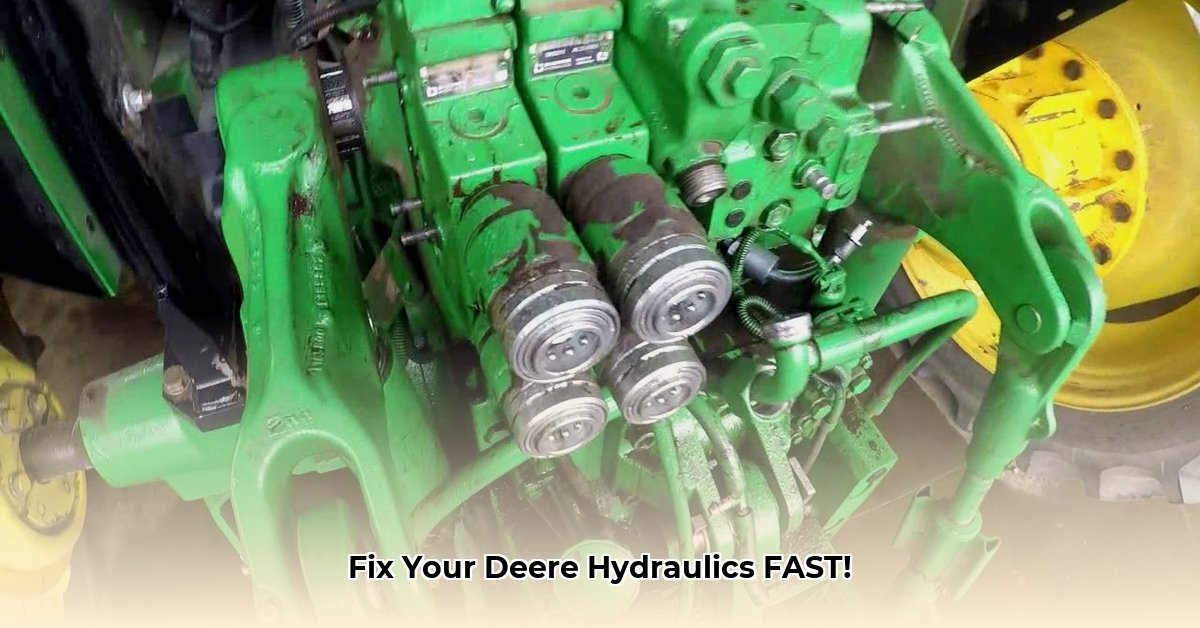
Hydraulic pressure is the lifeblood of your John Deere tractor. It powers the loader, operates the three-point hitch, and drives many attachments. When pressure drops, performance plummets. Tasks become slow, weak, or impossible to complete. This failure affects productivity and can signal serious, costly damage.
- Understanding Hydraulic Pressure Loss in John Deere Equipment
- Common Causes of Low Hydraulic Pressure
- Hydraulic System Component Failures
- Why Hydraulics Lose Pressure Under Load
- Step-by-Step Hydraulic Pressure Troubleshooting
- Diagnosing Specific Hydraulic Problems
- DIY Hydraulic Pressure Repair Solutions
- When Professional Hydraulic Repair is Needed
- Preventive Maintenance to Avoid Hydraulic Pressure Loss
- Conclusion
This guide provides a complete roadmap. We will explain how your hydraulic system works. We will identify every common cause of pressure loss, from simple fixes to complex failures. You will learn to diagnose issues step-by-step and understand when to call a professional. Our goal is to restore your machine’s power and reliability.
Understanding Hydraulic Pressure Loss in John Deere Equipment
How Hydraulic Systems Work in John Deere Tractors
The hydraulic pump creates flow. This pressurized oil is directed by control valves to cylinders or motors. The system converts fluid pressure into mechanical force. This force lifts, lowers, pushes, and pulls your implements with precision.
Normal Hydraulic Pressure PSI Ratings and Flow Rates
Most John Deere tractors operate between 2000 and 3000 PSI. Compact utility models are often near 2500 PSI. Flow rates (GPM) vary by model and pump size. Always consult your operator’s manual for exact specifications. Correct pressure is vital for proper function.
Signs Your John Deere is Losing Hydraulic Pressure
The loader lifts slowly or sags under weight. The three-point hitch drifts down or won’t lift. You hear the engine strain when using hydraulics. All implements operate slower than normal. These are clear warnings of a pressure problem.
Difference Between Open Center and Closed Center Systems
Open-center systems have constant pump flow. Valves block or redirect this flow to work. Closed-center systems build pressure only on demand. Most modern John Deere tractors use closed-center systems. Knowing your system type helps diagnosis.
Common Causes of Low Hydraulic Pressure
Low Hydraulic Fluid Level and Reservoir Issues
A low fluid level is the simplest cause. The pump sucks air instead of oil, causing cavitation. Check the sight glass or dipstick with the machine level. Also ensure the reservoir breather cap is not clogged. A clogged cap can create a vacuum.
Contaminated or Wrong Type Hydraulic Fluid
Dirt and water degrade fluid quality. This increases wear and can clog valves. Using the wrong fluid viscosity harms the pump. Always use John Deere’s recommended Hy-Gard or equivalent. Contamination is a leading cause of component failure.
Worn Hydraulic Pump and Internal Leakage
The pump’s internal gears or pistons wear over time. This creates internal leakage, reducing flow and pressure. The pump cannot generate its rated output. Worn pumps often make a whining or howling noise. They must be rebuilt or replaced.
Clogged Hydraulic Filters and Restricted Flow
Filters protect the system by trapping contaminants. A severely clogged filter restricts oil flow to the pump. This causes starvation, pressure loss, and pump damage. Replace filters at the recommended service intervals. Never ignore a clogged filter warning.
Hydraulic System Component Failures
This indicates severe internal wear or failure. The pump cannot create the necessary resistance. Testing with a pressure gauge will show very low readings. Causes include worn internal parts or a broken drive coupling. Pump replacement is usually required.
Faulty Pressure Relief Valve Problems
The relief valve protects the system from over-pressure. If it sticks open, oil bypasses back to the tank prematurely. System pressure will never reach its normal setting. This valve can malfunction due to debris or wear. It often requires cleaning or replacement.
Hydraulic Cylinder Seal Leaks and Internal Bypass
Worn piston seals inside a cylinder allow oil to leak past. Pressure fluid bypasses from one side of the piston to the other. This causes drift and an inability to hold a load. The cylinder must be disassembled and resealed to fix this.
Damaged Hydraulic Lines and External Leaks
Cracked, frayed, or corroded hoses can leak externally. This leads to a visible loss of hydraulic fluid. Damaged steel lines can also leak or restrict flow. External leaks reduce system pressure and fluid volume. They must be repaired immediately.
Why Hydraulics Lose Pressure Under Load
Hydraulic Pressure Drops When Loader is Lifted
This is a classic symptom of a failing pump or relief valve. The system cannot maintain pressure when demand is highest. The load requires more force than the weakened system can provide. Testing pressure under load reveals the true weakness.
Three-Point Hitch Won’t Raise or Hold Position
This points to pressure loss in the lift circuit. Likely culprits are the lift cylinder seals or control valve. Internal leakage prevents building enough force to lift. Drift after lifting indicates seal failure in the cylinder or valve.
Weak or Slow Hydraulic Response Under Load
The system works but lacks power and speed. Flow and pressure are below optimal levels. This can be caused by a worn pump, internal leaks, or contamination. The system struggles to meet performance specifications under strain.
Intermittent Hydraulic Pressure Issues
Pressure comes and goes unpredictably. This is often due to debris floating in the system. A piece of debris may intermittently block a valve orifice. Air in the fluid can also cause erratic performance. A thorough system flush may be needed.
Step-by-Step Hydraulic Pressure Troubleshooting
How to Test John Deere Hydraulic Pressure with a Gauge
Connect a 5000 PSI gauge to a quick-couple test port. Start the engine and run the hydraulics at normal temperature. Operate the function to its relief valve setting. Compare the reading on the gauge to the manual’s specification.
Visual Inspection for Hydraulic Fluid Leaks
Look under the tractor for puddles or wet spots. Check all hoses, fittings, cylinders, and the pump. Inspect the reservoir and filter housings for leaks. Track down even small leaks; they indicate failing components. Clean the area first to spot fresh leaks.
Checking Hydraulic Pump Performance and GPM Output
This requires a flow meter installed in the pressure line. It measures gallons per minute (GPM) at a set pressure. Compare the measured flow to the pump’s rated output. A significant drop indicates a worn pump. This is a professional diagnostic step.
Testing Priority Valve and Selective Control Valves
These valves direct flow to critical functions first. A faulty valve can starve certain circuits. Testing involves checking pressure at different valve outlets. Malfunctions require disassembly, cleaning, or replacement. Refer to detailed service manuals.
Diagnosing Specific Hydraulic Problems
Oil thins as it heats up. Internal clearances in a worn pump increase. This allows more internal leakage when the oil is hot. The system performs fine cold but fails at operating temperature. This strongly indicates a worn pump or components.
Hydraulic Fluid Foaming and Cavitation in Pump
Foamy, milky-looking fluid means air is entering the system. Check for low fluid level or a leak on the suction side. Cavitation is the formation of vacuum bubbles in the pump. It causes a loud whining noise and damages pump internals.
Suction Line Restriction and Air in System
A clogged suction line or filter starves the pump. A cracked or loose suction hose draws in air. Both cause cavitation, noise, and severe pressure loss. Inspect the entire path from the reservoir to the pump inlet carefully.
Hydraulic System Overheating Issues
Overheating thins the oil, reducing its lubricating ability. Causes include a failing cooler, constant relief valve bypass, or overworking. Low fluid and internal friction also generate excess heat. Address the root cause to prevent major damage.
DIY Hydraulic Pressure Repair Solutions
Checking and Replacing Hydraulic Fluid (Hy-Gard)
Use only the fluid specified in your manual. Drain old fluid when the system is warm. Replace filters every time you change the fluid. Refill slowly and check the level after cycling the functions. Proper fluid is the first line of defense.
Cleaning or Replacing Clogged Hydraulic Filters
Locate the suction filter and pressure filter(s). Replace them according to the service schedule. If replacing doesn’t help, contamination is severe. A full system flush may be necessary to remove all debris.
Repairing Hydraulic Cylinder Seal Leaks
Disconnect and safely remove the cylinder. Disassemble it on a clean workbench. Replace all seals and O-rings with a kit. Polish the cylinder rod if scratched. Reassemble with care and bench-test before installing.
Fixing External Hydraulic Line Leaks
Replace damaged hoses; do not attempt temporary repairs. Ensure new hoses have the correct pressure rating and length. Tighten fittings to specification with proper tools. Always clean fittings before reconnection to prevent contamination.
When Professional Hydraulic Repair is Needed
Replacing a Failed Hydraulic Pump
This is a complex repair requiring special tools. It involves removing the pump, often from inside the housing. Proper alignment and priming are critical. Incorrect installation leads to immediate failure. Trust this job to a qualified technician.
Rebuilding Hydraulic Cylinders and Valves
Internal valve bodies have precise tolerances. Specialized knowledge and clean room conditions are needed. A professional rebuild ensures correct function and prevents leaks. They can also source original or high-quality replacement parts.
Hydraulic System Flush and Contamination Cleanup
Severe contamination requires a professional flush. They use dedicated machines and special flushing oil. This process cleans passages a simple drain cannot reach. It is essential after a major component failure to protect new parts.
Expected Hydraulic Repair Costs for John Deere
Costs vary widely. A new pump can cost from $800 to over $3000 plus labor. Resealing a cylinder may cost a few hundred dollars. Diagnostic time is also a factor. Get a detailed estimate before authorizing major work.
Preventive Maintenance to Avoid Hydraulic Pressure Loss
Hydraulic Fluid Check and Change Intervals
Check the fluid level before every use. Change the fluid at the interval in your manual, often every 1000 hours. Severe operating conditions require more frequent changes. Clean fluid is the most important maintenance item.
Hydraulic Filter Replacement Schedule
Replace filters more often than you think. Follow the manual’s schedule strictly. If operating in dusty conditions, change filters early. Never bypass a filter. It is a cheap investment compared to a new pump.
Hydraulic Oil Analysis for Early Problem Detection
Send a fluid sample to a lab periodically. They can detect wear metals, water, and dirt. This predicts failures before they cause downtime. It is a proactive, cost-effective strategy for valuable equipment.
Proper Storage and Winterization for Hydraulic Systems
Park implements lowered to retract cylinders. This protects seals from weather and UV light. In cold climates, use the proper winter-weight fluid. Consider using a hydraulic oil heater for very cold starts.
Conclusion
Hydraulic pressure loss on your John Deere is a serious but manageable problem. Start with the basics: check fluid level and condition. Inspect filters and look for obvious leaks. These simple steps often reveal the issue. For deeper problems, systematic diagnosis is key. Use a pressure gauge to measure performance accurately.
Understanding the cause guides the correct repair. Many external leaks and filter changes are DIY-friendly. However, internal failures like a worn pump require professional service. Investing in quality repairs prevents recurrent issues and costly downtime.
Ultimately, prevention is your most powerful tool. Adhere to strict fluid and filter change schedules. Consider periodic oil analysis. This proactive care protects your investment. It ensures your John Deere delivers the reliable hydraulic power you depend on for years to come.