

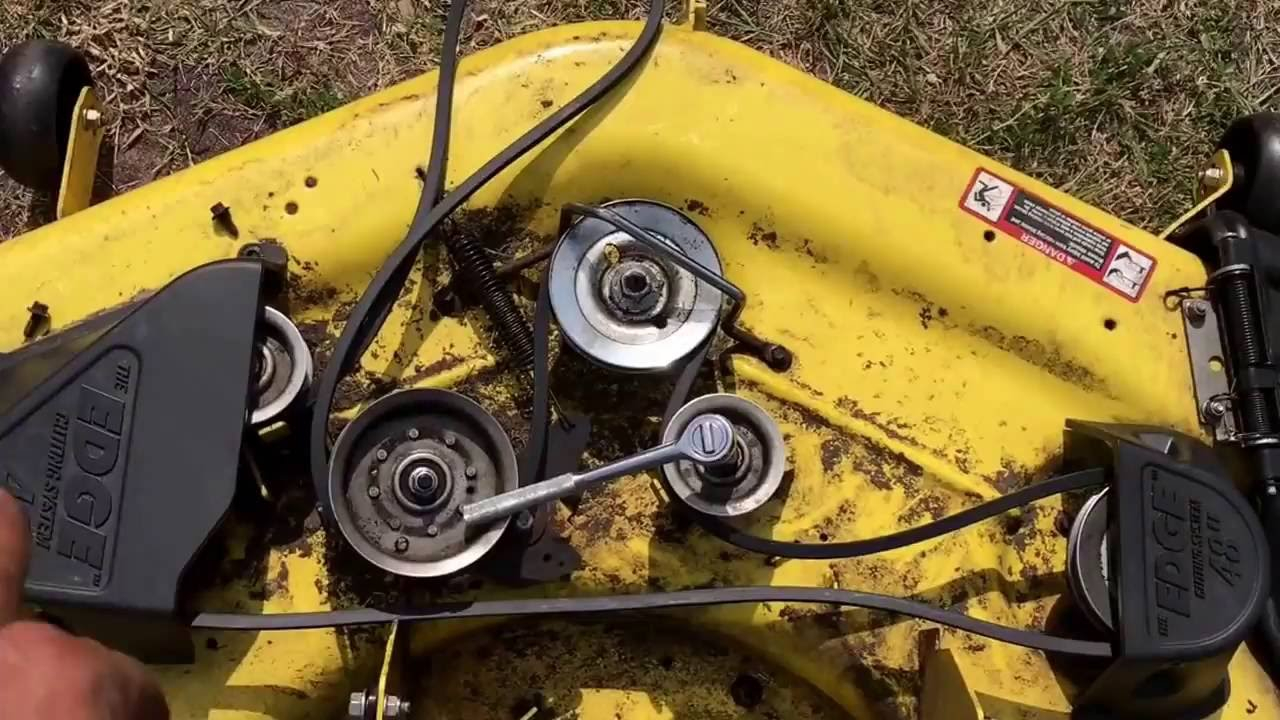
John Deere. The name is synonymous with durability, reliability, and an almost legendary status in agriculture and landscaping. For many, it represents a premium investment justified by decades of trust. That’s why a report of a critical failure after only nine hours of operation isn’t just a minor inconvenience, it’s a profound breach of expectation.
- The Hook: A Story of Broken Trust
- The Anatomy of a Critical Link: What is the PTO Belt?
- Installation Error: The Prime Suspect
- The Aftermath: Navigating Warranty, Downtime, and Trust
- The Critical Pre-Operation Inspection
- The Importance of a “Break-In” Period
- Conclusion: A Call for Diligence Over Blind Faith
This article dissects the case of a John Deere PTO belt that snapped in less than a single workday. We’ll move beyond frustration to conduct a forensic analysis, explore the implications for the owner, and extract crucial lessons for every equipment operator.
The Hook: A Story of Broken Trust
Imagine the scenario. A farmer or a landscaping business owner takes delivery of a new or newly serviced John Deere tractor. There’s a sense of confidence that comes with the iconic green and yellow livery. The first few hours are spent on light duty, perhaps beginning the season’s mowing or tilling.
Then, in hour nine, a loud SNAP followed by a sudden loss of power to the implement. The investigation reveals the culprit: the Power Take-Off (PTO) drive belt, shredded and lifeless.
The immediate reaction is a mix of shock and frustration. This component, vital for operation, shouldn’t be a consumable item measured in hours. The questions flood in: Was I sold a defective product? Did the dealer make a mistake? Is this a sign of a bigger problem?
This incident forces us to look past the brand’s reputation and examine the mechanical realities of such a premature failure.
The Anatomy of a Critical Link: What is the PTO Belt?
Before diagnosing the failure, we must understand the component’s role.
More Than Just an Accessory
The PTO belt is the essential intermediary between the engine’s power and the implement that does the actual work—be it a rotary cutter, a baler, or a post-hole digger. It translates rotational force from the tractor’s internal PTO shaft to the implement’s input shaft, often navigating complex paths over multiple pulleys, including idlers and tensioners.
Built for Endurance, Not Hours
Modern PTO belts are engineering marvels, constructed from multiple layers of high-tensile cords (often Kevlar or polyester) bonded in a tough, flexible compound designed to resist heat, wear, and environmental degradation.
They are rated for hundreds, if not thousands, of hours of service under significant torque and tension loads. A failure measured in single-digit hours is, by definition, abnormal and demands explanation.
Forensic Analysis: Diagnosing a 9-Hour Failure
A failure this rapid almost never has a single, simple cause. It’s typically the culmination of one or more underlying issues. Let’s rank the likely suspects from most to least probable.
Installation Error: The Prime Suspect
This is the leading cause of ultra-early belt failures. A PTO belt is not a “plug-and-play” item.
Incorrect Tension: This is the most common culprit. A belt that is too tight places excessive stress on the cords and sidewalls, leading to rapid heat buildup and catastrophic failure. A belt that is too loose will slip severely. Slippage generates intense, localized heat that can melt the belt’s rubber compound and weaken the cords in minutes.
Misalignment: If the pulleys are not perfectly parallel and in the same plane, the belt will track to one side, constantly rubbing against the pulley flange. This causes rapid, uneven wear on the belt’s sidewalls, leading to premature snapping.
Improper Seating: If the belt wasn’t fully seated in all pulley grooves during installation, it would run at an incorrect depth, altering its effective tension and contact area, leading to immediate stress concentrations.
Underlying Machine or Implement Defect
The belt may be the victim, not the culprit.
Seized or Dragging Bearings: A failed bearing in a PTO idler pulley, tensioner, or within the implement itself can create massive resistance. The belt, trying to turn this seized component, is subjected to loads far beyond its design limits.
Bent PTO Shaft or Damaged Pulleys: A slightly bent shaft or a pulley with a nick, burr, or out-of-spec groove acts like a tiny hammer, fatiguing the belt with every revolution.
Improper Implement Usage: Connecting an implement that requires more horsepower than the tractor can provide, or one with its own internal mechanical bind, can overload the entire PTO system.
External Contamination
A clean, dry belt is essential for grip and longevity.
Fluid Leaks: A leak from an engine seal, hydraulic line, or coolant hose dripping onto the belt and pulleys is a disaster. Oil, grease, and coolant drastically reduce the friction coefficient. The belt slips, overheats, and the rubber compound degrades almost instantly.
Debris Intrusion: In rare cases, a rock or piece of debris caught in the pulley guard could become jammed, shearing the belt directly.
Genuine Material or Manufacturing Defect
While possible, this is statistically the least likely cause for such a specific, early failure in a component from a major OEM supplier. Modern manufacturing quality control is highly effective at catching gross defects. A material flaw might cause failure, but it would often be seen in a batch of belts, not typically as an isolated incident at exactly nine hours.
The Aftermath: Navigating Warranty, Downtime, and Trust
The broken belt is just the start of the problem. The owner now enters a complex phase of logistics and negotiation.
The Warranty Maze
The first call is to the dealership. While a PTO belt might be covered under a “parts and labor” warranty for a new machine, the critical question is: what is the root cause diagnosis? A reputable dealer shouldn’t just slap on a new belt.
They must investigate and address the underlying issue—be it correcting their own installation error, replacing a faulty idler pulley, or identifying a leak. If the dealer dismisses it as “just a bad belt,” the cycle will likely repeat.
The Hidden Cost: Downtime
For a professional, time is money. A failed machine during planting, harvesting, or a critical contract mowing job can lead to financial losses far exceeding the cost of the belt. The wait for a service appointment, diagnosis, and parts can compound the frustration, testing loyalty to the brand and dealer.
Eroding the Foundation of Trust
Brands like John Deere are built on a legacy of reliability. An incident like this strikes at the heart of that value proposition. It shifts the owner’s mindset from confident operator to wary inspector, constantly listening for the next potential failure.
Restoring that trust requires exceptional, transparent service from the dealer and, sometimes, direct engagement from the manufacturer’s regional representative.
Proactive Prevention: Lessons for Every Equipment Owner
This case serves as a critical lesson in proactive ownership, especially for new or freshly serviced equipment.
The Critical Pre-Operation Inspection
Never assume “factory fresh” means “perfectly set up.”
Visual Alignment Check: Before starting, look down the path of the belt. All pulleys should appear in a straight line.
Tension Check: Learn the manual’s specification for deflection (how far the belt should move when pressed at the midpoint of the longest span). A simple gauge or a trained thumb can spot an egregiously wrong tension.
Cleanliness Check: Look for signs of fluid leaks or debris in the belt housing.
The Importance of a “Break-In” Period
Treat the first 10-20 hours as a shakedown cruise. Operate under moderate, varying loads. This allows you to monitor temperatures, listen for unusual noises (squealing = slip, grinding = bearing), and feel for vibrations. It also gives any minor installation issues a chance to reveal themselves before a catastrophic failure under full load.
Document Everything
Take photos of the failed belt and its installation path. Record the exact machine hours. Note the operating conditions. This documentation is invaluable for a clear, factual discussion with your dealer and strengthens your warranty claim.
Foster a Relationship with Your Dealer
Communicate clearly. When taking delivery, ask about the Pre-Delivery Inspection (PDI) process. A good dealer will welcome an informed customer. If a failure occurs, approach them with a collaborative, problem-solving attitude: “We have a failure; let’s work together to find out why so it doesn’t happen again.”
Conclusion: A Call for Diligence Over Blind Faith
The premature snapping of a John Deere PTO belt after nine hours is more than an isolated parts failure. It is a stark reminder that even within the most engineered and trusted systems, the potential for human error during assembly, hidden defects in adjacent components, or simple oversights exists.
The ultimate lesson is not to lose faith in engineering, but to augment it with personal diligence. Trust, but verify. The most important tool in your shed isn’t just the tractor itself; it’s a keen eye, a basic understanding of its systems, and the willingness to speak up when something doesn’t seem right.
By adopting a proactive stance—from the pre-operation inspection to thorough post-failure analysis—you protect your investment, ensure your productivity, and hold the legendary standard of your equipment to its rightful, high mark.