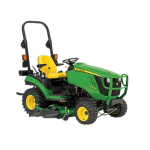


Owning a John Deere 1025R comes with a lot of questions, whether you’re thinking about buying one or you already have it in your garage. This isn’t just a list of specs—it’s real talk from owners and experts.
We’ve compiled the most common, burning questions (and their straight-to-the-point answers) to save you time scrolling through forums. Let’s get to the bottom of what the 1025R can and can’t do.
General Overview & Capabilities
Let’s start with the big picture. These questions cover what the 1025R is, who it’s for, and how it fits into your life. We’ll clear up the basics so you can understand its true purpose and potential.
What is the John Deere 1025R best used for?
Think of it as your ultimate property Swiss Army knife. It’s the perfect machine for the 2-10 acre homeowner who has a mixed bag of chores.
It excels at finish mowing, clearing snow with a blower, light landscaping with the loader, digging with a backhoe, and hauling materials with pallet forks. It’s not a field tractor, but the king of suburban homestead projects.
Is the 1025R a lawn tractor or a compact utility tractor?
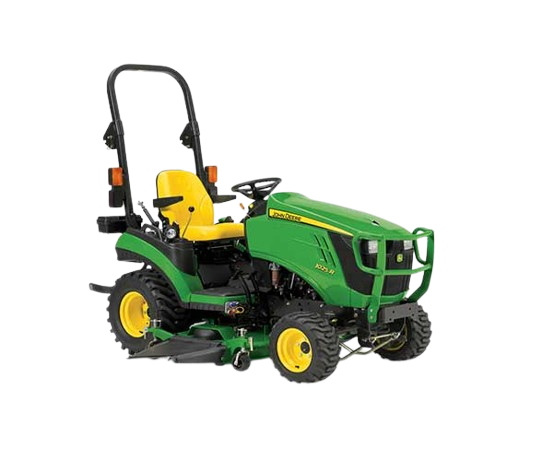
Let’s settle this: it’s a true compact utility tractor, just in a smaller package. It has a rugged diesel engine, a hydraulic transmission, and a frame built for real work.
Unlike a lawn tractor, it can lift serious weight with its loader and run powered attachments via its PTO. So, it mows like a pro but works like a tractor. Don’t let its size fool you.
What is the operating weight of the JD 1025R with loader?
Ready for the numbers? The bare tractor weighs about 1,500 lbs (680 kg). Add the essential Quick-Tatch loader, and you’re looking at roughly 2,000 lbs (900 kg) minimum.
Remember, this is a key figure for towing and transport. If you add a mower deck, filled tires, or a cab, the total weight can easily approach 2,500 lbs or more. Always check your trailer’s capacity.
Is the John Deere 1025R safe on slopes and hills?
With major caution, yes. Its low center of gravity and wide stance help, but it’s still a tractor—not an ATV. The number one rule is to always keep the heavy end (the engine) pointed uphill.
Use 4WD on slopes, go slow, and avoid sudden turns. For severe slopes, consider adding wheel weights for extra stability. When in doubt, walk the hill first and don’t push your comfort zone.
What is the fuel consumption of the 1025R?
You’ll be pleasantly surprised. The efficient Yanmar diesel sips fuel. Under typical mixed use like mowing and light loader work, expect about 0.6 to 0.9 gallons (2.3-3.4 liters) per hour.
That means a full 5-gallon tank can easily last you a full day of moderate chores. It’s one of those costs that hardly makes a dent in your budget, which is a nice change.
Is the 1025R good for a first-time tractor owner?
Absolutely. In fact, it’s one of the best first tractors you can buy. The hydrostatic transmission is intuitive—one pedal for go, one for stop, no gears to grind.
John Deere’s controls are logically laid out and well-marked. It’s forgiving, capable, and has a huge community online for when you have questions. You’ll feel confident in no time.
How many hours will a Deere 1025R last?
With proper maintenance, hitting 3,000 to 4,000 hours is a very realistic expectation. That’s decades of use for the average homeowner. The Yanmar engine is famously long-lived.
The key is following the service schedule religiously. Most wear items are consumables (belts, hoses, filters). Treat it well, and this tractor could outlast your mortgage.
What are the main advantages of the 1025R vs. competitors?
Three words: ecosystem, refinement, and resale. The John Deere attachment system is seamless, the dealer network is unmatched, and the fit-and-finish feels premium.
Compared to rivals, it often boasts a smoother hydraulic system and more intuitive operator platform. And that green paint holds its value notoriously well when it’s time to upgrade.
What are the 1025R’s biggest limitations?
It’s a subcompact, so size is its main constraint. The loader can’t lift mini-excavator-level weights, and the backhoe, while handy, has its depth limits.
Pushing into wet, heavy clay or trying to move massive boulders will humble it. Know its limits—it’s a phenomenal property tool, not a construction site workhorse.
What’s the difference between the 1025R and the 1023E?
Think of the 1023E as the value-oriented sibling and the 1025R as the premium model. The most noticeable difference is horsepower: the 1025R has about 24 HP, while the 1023E has 22 HP.
The 1025R also often includes more standard features, like a telescoping lower link for the 3-point hitch, making attaching implements slightly easier. You pay a bit more for the extra polish.
Engine, Power & Key Specifications
Now, let’s look under the hood. This section dives into the technical heart of the 1025R—the numbers that define its strength, efficiency, and overall capability. We’ll translate the specs from the brochure into what they mean for your work.
How much horsepower does the John Deere 1025R really have?
The official gross engine horsepower is 24.2 HP. But the more critical number for actual work is the PTO horsepower, which is about 19.5 HP. This is the power actually available at the rear to run demanding attachments like rotary cutters and snow blowers. Think of it as the “usable” horsepower for your toughest chores.
Is the Deere 1025R’s engine a Yanmar?
Yes, absolutely. The heart of the 1025R is a 3-cylinder, liquid-cooled diesel engine built by Yanmar. This partnership is a major selling point, as Yanmar is a world leader in compact diesel technology, renowned for reliability, smooth operation, and excellent fuel efficiency.
What’s the difference between engine HP and PTO horsepower?
Engine HP is the raw power the engine produces. PTO (Power Take-Off) HP is what’s left after powering the tractor’s own hydraulics, transmission, and accessories. It’s the power delivered to run implements. For the 1025R, you “lose” about 4-5 HP between the two figures, which is normal and efficient for its class.
What is the torque rating of the 1025R engine?
The engine produces a healthy about 60 Nm of torque. Torque is the twisting force that gives you pushing and pulling power, especially at low RPMs. This high torque is why the 1025R feels so strong when creeping into a heavy pile of dirt or mowing through thick grass without stalling.
What type of fuel does the JD 1025R use?
It runs exclusively on diesel fuel. Using clean, on-road #2 diesel is highly recommended for optimal performance and longevity. Always add a diesel fuel conditioner/stabilizer if the tractor will sit for extended periods, especially in cold climates, to prevent fuel gelling and algae growth.
What is the PTO horsepower (HP) of the 1025R?
As mentioned, the rear PTO delivers approximately 19.5 HP. This is the key spec for matching compatible implements. For example, it can comfortably run a 60-inch mid-mount mower or a 50-inch rear rotary cutter. Exceeding the recommended PHP for an attachment can overload and damage the engine.
How many cylinders does the 1025R engine have?
It features a 3-cylinder configuration. This design offers an excellent balance of smooth operation, compact size, and strong torque output. The three-cylinder diesel is known for its distinctive, throaty sound that’s music to any tractor enthusiast’s ears.
What is the engine oil capacity for a 1025R?
The engine crankcase holds approximately 3.8 quarts (about 3.6 liters) of oil with a filter change. Always refer to your operator’s manual for the exact specification and use the recommended oil viscosity (typically 15W-40 diesel-rated oil) for your climate.
Can the 1025R’s engine handle bio-diesel?
John Deere approves the use of B5 (5% bio-diesel) or lower blends in the 1025R. Higher blends (like B20) are not recommended as they can degrade rubber seals and gaskets over time and may cause fuel system issues in colder temperatures. When in doubt, stick with standard diesel.
What’s the cooling system on the 1025R (air or liquid)?
It uses a highly efficient liquid-cooling system with a radiator and coolant. This is superior to air-cooling for maintaining a consistent operating temperature under heavy load, which is critical for engine longevity and preventing overheating during tough summer jobs.
Loader Performance & Lift Capacity
The front loader transforms the 1025R from a mower into a true workhorse. In this section, we tackle the practical realities of its lifting power, stability, and what you can realistically accomplish with it. We’ll move beyond the brochure’s “lift to full height” spec to what matters on your property.
What is the actual lift capacity of the JD 1025R loader?
The official rated operating capacity (to full height at the pivot pins) is 905 lbs (410 kg). However, this is a lab-tested maximum. In real-world conditions, with the bucket extended and material shifting, plan for a safe, practical limit of 600-700 lbs to maintain stability and control, especially on uneven ground.
How much can the Deere 1025R lift with pallet forks?
With a set of pallet forks, you can utilize the full 905 lbs capacity, but the weight becomes critical. A standard 48″x48″ skid of pavers or blocks often weighs 800-1,000 lbs, so you must weigh your load. The real advantage of forks is secure, balanced lifting, allowing you to safely handle items like large potted trees or fertilizer bags at the loader’s maximum safe limit.
Is the 1025R loader strong enough to move gravel and dirt?
Absolutely. It’s perfectly suited for moving loose materials. The 1025R’s 54-inch bucket holds about 1/2 cubic yard (roughly 800-1,200 lbs of gravel). You’ll fill it in a couple of scoops, move it quickly, and dump it precisely. For large-scale earthmoving (like moving 20 yards of topsoil), it’s efficient but will take time—it’s a tractor, not a dump truck.
What is the breakout force of the 1025R front loader?
John Deere lists the breakout force at the pivot pins as 1,314 lbs (596 kg). This is the downward curling force used to pry material out of a pile or break up compacted soil. It’s a solid figure for its size, meaning it can dig into a pile of gravel or loosen hard-packed dirt without needing a running start.
Can the John Deere 1025R lift a full IBC tote?
This is a classic test. A standard 275-gallon IBC tote full of water weighs about 2,300 lbs. The 1025R cannot safely lift this—it’s more than double its rated capacity. However, it can easily move an empty tote (around 100 lbs) or one that’s partially filled. Always know your load weight before attempting.
How does adding a backhoe affect the 1025R’s loader performance?
The backhoe acts as a significant counterweight, which is a major benefit for loader work. It adds over 600 lbs to the rear, dramatically improving stability and reducing the risk of tipping when lifting heavy loads in the front bucket. It doesn’t increase lift capacity, but it lets you use more of that capacity safely.
What are the best practices for safe loading with the 1025R?
Always carry loads low to the ground when traveling. Use 4-wheel drive for added stability on slopes. Make slow, gradual turns to avoid momentum swings. Never lift a max load on a significant side slope. And most importantly, if it feels tippy, it is—set the load down and reassess. Your instincts are a crucial safety device.
Are there any weight restrictions for the 1025R’s front tires?
While there’s no specific “restriction,” the standard industrial tires are rated for the tractor’s design. Overloading the loader repeatedly can lead to premature tire wear or failure. For heavy, constant loader use, many owners upgrade to pneumatic (air-filled) industrial tires or even add foam filling (“tireject”) for maximum durability and to eliminate flats.
Can you upgrade the 1025R’s hydraulic system for more lift?
No, there are no practical or safe factory-approved upgrades to increase the loader’s hydraulic pressure or cylinder size. The system is designed as an integrated unit. Attempting to increase pressure can damage seals, hoses, and the hydraulic pump. The capacity is what it is—work within its limits.
How does the 1025R’s loader compare to a small skid steer?
It’s a different league. A compact skid steer might lift 1,500-2,000 lbs and is built for brutal, continuous material handling. The 1025R’s loader is highly capable for its frame but is designed as a versatile tool, not a dedicated lifter. The 1025R wins on comfort, versatility (PTO, 3-point hitch), and gentleness on lawns. The skid steer wins on pure lift and agility in tight, sacrificial spaces.
Attachments & Compatibility
The 1025R’s true power lies in its ability to change jobs in minutes. This section covers the tools that make it a year-round workhorse—from cutting grass to clearing snow and digging trenches. We’ll answer what fits, what works best, and what you need to know before you buy.
What is the best mower deck size for the John Deere 1025R?
The common choices are the 54-inch and 60-inch mid-mount mower (MMM). For most owners with 2-5 acres of varied terrain, the 54-inch deck is the ideal sweet spot. It provides ample cutting width for efficiency while being more maneuverable around trees and obstacles, and it puts less strain on the PTO in thick grass. Choose the 60-inch only if you have large, open lawns and prioritize speed over maneuverability.
Is the 1025R backhoe attachment worth the investment?
It depends on your project list. If you have more than 50 hours of digging work planned—like stumps, drainage trenches, or foundation holes—then yes, it pays for itself versus renting or hiring out. For the occasional small hole, it’s harder to justify. The frame-mounted 260 Backhoe is robust and effective, but remember it’s a dedicated tool that requires time to install and remove.
Can the Deere 1025R run a front-mounted snow blower?
Absolutely, and it’s a game-changer for winter. The 1025R can power a two-stage, front-mounted snow blower (typically 54″ or 60″ wide) via its mid-PTO. This setup allows you to blow snow while keeping the rear free for added wheel weights or a rear blade for scraping. It transforms the tractor into a formidable driveway-clearing machine, far outperforming a utility vehicle with a plow.
What size rotary cutter or brush hog can the 1025R handle?
With its 19.5 PTO HP, the 1025R is comfortably matched with a 4-foot (48-inch) medium-duty rotary cutter. This size is perfect for maintaining pastures, cutting overgrown fields, and clearing light brush. A 5-foot cutter is too much for it in heavy material and risks bogging down the engine. Stick with a 4-foot model for optimal performance and longevity.
Are pallet forks a useful attachment for the JD 1025R?
Pallet forks are arguably one of the most useful and versatile attachments you can own. They turn your loader into a material handling champion. You can move skids of pavers, haul bulky items like logs or furniture, reposition large potted plants, and even use them as improvised grading tools. For the cost, they offer immense utility and are a top recommendation.
Can you use a post hole digger with the 1025R?
Yes, the 1025R can operate a standard 3-point hitch mounted post hole digger (PHD) using its rear PTO. This is ideal for fencing projects. Given the tractor’s size, a digger with a 9-inch diameter auger is the practical maximum for clay or rocky soils. In soft soil, you might manage a 12-inch. Always dig slowly and use downforce hydraulics if your model has them.
What’s the difference between a front blade and a rear blade for the 1025R?
A front blade (mounts on the loader arms) is for quick, lightweight pushing and back-dragging, like clearing light snow or grading a gravel drive. A rear blade (3-point hitch) is heavier, more powerful, and used for serious grading, ditching, and backfilling. For most owners, a rear blade is the more versatile and effective tool for earthmoving and driveway maintenance.
Is the 1025R compatible with third-party (non-John Deere) attachments?
Yes, but with a major caveat. The loader uses a standard Skid-Steer Quick Attach (SSQA) plate, so most third-party buckets, forks, and grapples will fit. However, for mid-PTO attachments (mower deck, snow blower) and the 3-point hitch, compatibility is trickier. John Deere uses specific drive shafts and hookups. Always verify dimensions, PTO shaft length, and hydraulic requirements before buying.
How difficult is it to switch attachments on the 1025R?
It’s designed to be simple. The loader and mower deck use a quick-attach system that lets you drive on and off in under 5 minutes with minimal tools—no crawling in the dirt. The 3-point hitch attachments require more manual lifting and aligning, which can be a 10-15 minute job for one person. The backhoe is the most involved, taking 20-30 minutes to install or remove.
What is the most useful but underrated attachment for the 1025R?
The ballast box. It’s not glamorous, but it’s essential for safe operation. When using the loader near its capacity, a ballast box (filled with concrete or sand) on the 3-point hitch provides crucial rear counterweight. This prevents dangerous rear-wheel lift, improves traction, and reduces wear on the front axle. It’s the smart attachment that makes using all the others safer and more effective.
Transmission & Driving
Getting around your property is just as important as the work itself. This section covers the 1025R’s hydrostatic transmission, driving characteristics, and how it handles different terrains. We’ll explain the controls, discuss speed, and address common questions about its operation and limitations on the move.
Is the John Deere 1025R transmission manual or automatic?
It features a hydrostatic transmission (HST), which is essentially an automatic for tractors. There are no gears to shift. You control speed and direction solely with two pedals: one for forward, one for reverse. The further you press, the faster you go. It’s incredibly intuitive and allows for infinite speed control within its range.
How fast can the Deere 1025R go?
In its fastest travel gear, the 1025R has a top speed of approximately 9.5 mph (15.3 km/h). This is perfectly suited for moving around a property safely and efficiently. It’s not built for road travel, but for getting from the barn to the back forty without wasting time. The priority is on torque and control, not highway speed.
What do the two pedals on the 1025R do?
The two pedals are the heart of the hydrostatic drive. The right pedal is for forward motion, and the left pedal is for reverse. Pressing either pedal increases speed in that direction; releasing it slows you down. Pressing both pedals at once acts as a brake. It’s a simple, foot-controlled system that lets you keep your hands free for operating attachments.
Is the JD 1025R easy to drive for a beginner?
Absolutely. It is widely considered one of the easiest tractors to learn on. The HST pedals eliminate stalling and gear grinding. The controls are logically grouped, and the operator station offers good visibility. Most new owners feel comfortable with basic operations like mowing and loader work within their first hour or two of use.
Can the 1025R go in reverse as fast as it goes forward?
Yes, the hydrostatic transmission provides equal speed potential in both directions. This is a huge advantage for loader work, like backdragging or precise maneuvering when box-blading. You can quickly shuttle back and forth at the same controlled speed, making repetitive tasks much more efficient than with a gear-driven tractor.
Does the 1025R have a cruise control feature?
Yes, it does. A handy mechanical cruise control lever is located on the right side of the operator’s platform. You set your desired speed with the pedal, flip the lever, and you can take your foot off. This is a fantastic feature for long, straight runs while mowing or snow blowing, reducing operator fatigue significantly.
What’s the best way to drive the 1025R on hills?
The golden rules are: always go straight up or down the slope, never across, and keep the heavy end (the engine) pointed uphill. Use 4WD for maximum traction and stability, and descend slowly in a low gear, letting engine compression help brake. Avoid sudden turns or jerky movements. If a hill feels too steep, it probably is—find another way.
Can you safely tow heavy trailers with the 1025R?
Yes, but know its limits. The 1025R has a solid towing capacity of about 1,400 lbs (635 kg) for a traditional drawbar pull. It’s great for moving a utility trailer full of firewood, a small manure spreader, or a water tank. For heavier loads, ensure you have adequate rear ballast (like a box blade) to maintain steering control and prevent the front end from becoming light.
Does the 1025R have a differential lock?
Yes, it does. When one rear wheel starts to spin in mud or ice, you can press and hold the differential lock pedal (usually with your left heel) to mechanically lock both rear axles together, forcing them to turn at the same speed. This provides a major traction boost to get you unstuck. Remember to release it as soon as you’re moving again to avoid drivetrain stress on dry ground.
How does the 1025R’s transmission compare to a gear drive tractor?
The HST is superior for the 1025R’s intended use. It offers infinitely variable speed control, easier operation, and better precision for loader work and mowing compared to a clunky, limited-gear manual transmission. The trade-off is a slight loss in ultimate power transfer (parasitic loss) and potentially higher long-term maintenance costs for the hydrostatic system, but for most homeowners, the ease of use is worth it.
Hydraulics & 3-Point Hitch
This is the muscle and the backbone of your tractor. The hydraulic system powers your attachments and the 3-point hitch connects you to a world of tools. Here, we break down how they work, their capacity, and how to troubleshoot common issues to keep your implements running smoothly.
How does the hydraulic system work on the John Deere 1025R?
The 1025R uses an open-center hydraulic system. A gear pump pulls fluid from the reservoir and sends a constant flow through the control valves. When you’re not using a function, the fluid simply flows back to the tank. When you move a lever (like for the loader or 3-point hitch), the valve redirects this flow to the appropriate cylinder to create movement. It’s a simple, reliable design perfect for this class of tractor.
What is the lift capacity of the 1025R’s 3-point hitch?
The 3-point hitch at the link ends has a rated lift capacity of approximately 680 lbs (308 kg). This is plenty for most rear-mounted implements like a rotary cutter, rear blade, or post hole digger. Remember, this capacity is measured right at the hitch points; the further back an implement’s weight is (like on a long tiller), the less it can effectively lift due to leverage.
Can you add rear hydraulic remotes to the Deere 1025R?
Yes, adding one or two rear hydraulic remotes (also called SCVs) is a common and very useful factory-approved option. This allows you to operate implements with hydraulic functions, like a log splitter, a hydraulic top link, or a grapple attachment for the front loader. It’s best installed by your dealer for proper integration with the tractor’s hydraulic system.
Why is my 1025R’s 3-point hitch slow or weak?
The most common culprits are low hydraulic fluid or dirty fluid/clogged filter. Check the fluid level first with the tractor on level ground. If that’s fine, the next step is changing the hydraulic fluid and filter as per the maintenance schedule. Air in the system (often after a fluid change) can also cause a slow, jerky lift until it’s bled out through use.
What’s the difference between Category 0 and Category 1 hitches?
It’s about size and strength. The 1025R uses a Category 1 3-point hitch. This is the standard for compact tractors, with larger pin diameters (7/8″) and wider spacing between the lower lift arms than a smaller Category 0 hitch. Almost all implements designed for compact tractors (cutters, blades, tillers) are built to Category 1 specifications.
Can the JD 1025R run a hydraulic top link?
Yes, and it’s a fantastic upgrade for serious box blade or rear blade work. To run one, you must have a rear hydraulic remote kit installed. The hydraulic top link replaces the fixed, manual one, allowing you to adjust the angle of your rear implement from the operator’s seat for perfect grading, digging, or backfilling on the go.
How do you adjust the 3-point hitch lift arms on the 1025R?
The 1025R features telescoping lower lift arms. To adjust them, you simply pull a pin on each arm, extend or retract the arm to match the width of your implement’s lower pins, and re-insert the pin. This is a major quality-of-life feature that makes hooking up attachments much easier for one person, eliminating a lot of the traditional wrestling.
What type of hydraulic fluid does the 1025R use?
It requires John Deere Hy-Gard hydraulic fluid or a high-quality equivalent that meets the J20C/D specification. Using the correct fluid is critical. It acts as both a hydraulic fluid and a transmission lubricant for the hydrostatic system. The wrong fluid can lead to poor performance, overheating, and costly damage to pumps and motors.
Is the 1025R’s hydraulic system open or closed center?
As mentioned, it is an open-center system. This is the standard for most tractors of this size and complexity. It’s cost-effective and efficient for systems that don’t require multiple simultaneous high-pressure functions. More complex, larger tractors might use a closed-center system that maintains constant pressure.
How do you bleed air from the 1025R’s hydraulic system?
Air usually gets in after a fluid change or if the level gets too low. To bleed it, run the tractor at a mid-range RPM and slowly cycle all hydraulic functions repeatedly. Fully raise and lower the 3-point hitch and work the loader through all its motions (lift, lower, curl, dump) multiple times. The air will be pushed back into the reservoir. You may hear a whining or groaning noise until the air is purged.
Common Problems & Reliable Fixes
Even the best machines have their quirks. This section is a no-nonsense look at the known issues 1025R owners face, drawn from years of community experience. We focus on practical, proven fixes you can often handle yourself, saving you a trip to the dealer and getting you back to work faster.
Why does my John Deere 1025R engine smoke on startup?
A brief puff of white or blue smoke on a cold start is normal for a direct-injection diesel, especially in cooler weather. It’s unburned fuel due to incomplete combustion before the cylinder heats up. If you see constant blue smoke (burning oil) or heavy white smoke (coolant), it indicates worn piston rings or a head gasket issue, respectively, requiring professional diagnosis.
What causes the 1025R’s mower deck drive belt to keep breaking?
Chronic belt breakage is almost always caused by a misaligned or seized pulley, not a weak belt. Check the idler and mandrel pulleys for smooth, free rotation. A frozen pulley creates immense friction and heat. Also, ensure the belt is routed correctly per the deck diagram. Using a generic belt instead of the proper JD high-flex belt can also lead to premature failure.
Why is my Deere 1025R losing power or stalling under load?
This is a classic symptom of fuel starvation or air intake restriction. Start with the simple fixes: replace the fuel filter, check the air filter (and pre-cleaner), and ensure the fuel tank vent isn’t clogged (try running with the cap loose). If the problem persists, it could point to a failing fuel lift pump or contaminated fuel.
How do I fix a leaking steering cylinder on the 1025R?
A leaking steering cylinder is a common wear point. The fix involves replacing the seal kit inside the cylinder. You must remove the cylinder, disassemble it, replace the internal O-rings and seals, and reassemble. While DIY-able with mechanical skill, it requires special tools for gland nut removal and proper bleeding of the steering system afterward. Many owners opt for a dealer or hydraulic shop repair.
Why does my 1025R’s 3-point hitch not stay in position (creep down)?
Slow “creep down” of a raised implement over hours is usually normal. Rapid drop in minutes indicates a problem. The most likely cause is a worn or faulty lift cylinder O-ring or seal inside the hydraulic housing. Replacing these internal seals is a significant repair, often requiring splitting the tractor. First, rule out an external leak and ensure the drop rate control knob under the seat isn’t accidentally opened.
What’s the fix for a “no-start” issue on the JD 1025R?
Follow this logical checklist. First, ensure you’re fully seated (seat safety switch). Listen for the click of the fuel solenoid. No click? Check fuses and the key switch. If it cranks but won’t fire, check for fuel at the injectors (crack a line). Still nothing? Verify the seat switch, PTO switch, and brake pedal switch are all engaged correctly—these interlocks are the most common culprits for a crank/no-start.
Why is there hydraulic fluid leaking under my 1025R?
First, identify the color: amber fluid is engine oil, reddish is hydraulic/transmission fluid. Common hydraulic leak points are the steering cylinder seals (see above), the loader quick-attach couplers (reseat or replace O-rings), or the hydrostatic transmission input shaft seal. Pinpoint the highest point of the wet area to find the source. Even small leaks should be addressed to prevent pump damage.
How do I troubleshoot the 1025R’s PTO not engaging?
Start with the electrical safety interlock circuit. Ensure the PTO lever is fully disengaged, the operator is seated, and the brake is fully depressed. Listen for the “click” of the PTO engagement solenoid when you pull the lever. No click points to a faulty switch or solenoid. A click but no spin points to a mechanical issue like a sheared spline or a failed PTO clutch pack, requiring dealer service.
What causes the 1025R’s front tires to wear unevenly?
Excessive cupping or scalloping wear on the front tires is almost universally caused by under-inflation. These tires require higher pressure (often 20-30 PSI) than you might think to support the loader’s weight. Check and maintain pressure religiously. If wear is extreme on one side, check for misalignment or a worn front axle pivot bushing.
Why is my 1025R’s fuel gauge inaccurate or not working?
This is a frequent minor gripe. The issue is usually the fuel sending unit inside the tank. Over time, the float can stick or the variable resistor (potentiometer) on the unit can fail, sending incorrect signals to the dash. Replacing the sending unit is the fix. Some owners learn to track hours instead and refill based on the known ~0.8 gallons/hour consumption rate.
Buying Advice & Pricing
Taking the plunge on a 1025R is a big decision. This section cuts through the noise to give you straight talk on value, what to look for in a new or used machine, and how to navigate the deal. We’ll help you avoid common pitfalls and ensure you invest in the right tractor for your needs and budget.
What is a fair price for a used John Deere 1025R?
A fair price for a used 1025R depends heavily on its age, condition, hours, and included attachments. Generally, expect to pay between $12,000 and $18,000 for a well-maintained model (with 200-800 hours) that includes the loader and a mower deck. Models with additional attachments like a backhoe or snow blower will command prices at the higher end of this range or above.
Should I buy a new or used 1025R?
This depends on your budget and priorities. A new 1025R comes with a full warranty, the latest features, and peace of mind regarding maintenance history. A used one offers significant upfront savings. If you find a low-hour, well-documented used model from a trusted source, it can be an excellent value. For most, if the budget allows, new is preferable for a long-term investment.
What are the most important things to check when buying a used 1025R?
1. Service Records: Proof of regular maintenance is crucial.
2. Operational Check: Test all functions: start-up, drive in all ranges, engage PTO, operate loader and 3-point hitch fully.
3. Fluid Inspection: Check for clean engine oil and hydraulic fluid (no milkiness or metal).
4. Undercarriage & Frame: Look for cracks, excessive rust, or hydraulic leaks.
5. Attachment Wear: Inspect bucket edges, mower deck spindles, and tire condition.
How much does a new 1025R package with loader and mower cost?
As of recent pricing, a brand new John Deere 1025R package with the Quick-Tatch loader (H120) and a 54-inch or 60-inch mid-mount mower typically starts in the range of $18,000 to $22,000 before taxes and dealer fees. Final price can vary based on your specific dealer, regional factors, and any ongoing promotions or package deals.
What hidden costs should I budget for when buying a 1025R?
Beyond the sticker price, budget for:
– Sales Tax & Dealer Fees: Can add 5-10%.
– Essential Attachments: A ballast box (~$200) and maybe a rear blade or box blade ($500-$1,000).
– Initial Maintenance: First service kit (filters, fluids).
– Transport: Trailer rental or delivery fee if you don’t have a way to move it.
– Insurance for your new equipment.
Is it better to buy a 1025R from a dealer or private seller?
A dealer offers warranty (even on some used models), financing, service support, and some assurance of quality. A private seller typically offers a lower price. For a first-time buyer or if you want maximum security, a reputable dealer is the best choice. For a seasoned buyer who can thoroughly inspect a tractor, a private sale can yield great savings.
What year did the 1025R model come out, and have there been any major changes?
The John Deere 1025R was introduced around 2013 as part of the 1 Family Series, replacing the earlier 2305 model. Since its launch, there have been no major, fundamental changes to its platform, engine, or core specifications. Updates have been mostly minor and related to styling, optional features, and attachment compatibility. It has been a consistently reliable model throughout its production run.
What questions should I ask the seller of a used 1025R?
1. Why are you selling it?
2. Can you provide complete service records?
3. Has it had any major repairs or been in any accidents?
4. How many hours are on the engine? (Verify on the dash).
5. Are there any known issues or quirks I should know about?
6. Has it ever been used commercially or rented out?
7. Can I do a cold start and test all functions?
How does financing work for a new John Deere tractor?
John Deere Financial offers competitive financing through local dealers. The process is similar to auto financing: you apply (often at the dealer), they check credit, and offer terms. You may see options like 0% APR for a limited period (common during promotions) or low-interest loans for longer terms (e.g., 60-84 months). Dealers can also bundle attachment costs into the loan. Pre-approval is sometimes possible.
Is the 1025R known to hold its resale value?
Yes, exceptionally well. John Deere compact tractors, especially popular models like the 1025R, are famous for their strong resale value. Their reputation for reliability, extensive dealer network, and high brand demand mean they depreciate much slower than many competitors. A well-cared-for 1025R often retains 60-70% of its original value even after several years and hundreds of hours of use.
Routine Maintenance & Service
Preventive care is the secret to a long and reliable tractor life. This section provides clear, step-by-step guidance on the essential upkeep tasks—from simple oil changes to seasonal procedures. Follow this advice to protect your investment, prevent costly repairs, and ensure your 1025R starts and performs flawlessly season after season.
What is the basic maintenance schedule for a John Deere 1025R?
Follow the intervals in your operator’s manual. Key milestones:
Every 8 hours or daily: Check engine oil, coolant, and hydraulic fluid levels. Clean radiator screen.
Every 50 hours: Grease all loader and implement pivot points.
Every 100 hours: Change engine oil and filter (more frequently under heavy use).
Every 200 hours: Change hydraulic fluid and filter, clean air filter, check tire pressure.
Every 400 hours: Change fuel filter, check battery and belts.
Annually: Check and service the cooling system, inspect for loose hardware.
How do I change the engine oil and filter on my 1025R?
1. Run the engine for a few minutes to warm the oil, then shut it off.
2. Place a drain pan under the engine oil drain plug (on the bottom of the engine).
3. Remove the plug and allow oil to drain completely.
4. Remove the old oil filter (located on the side of the engine block).
5. Apply a thin film of new oil to the gasket of the new filter and screw it on hand-tight (do not overtighten).
6. Reinstall the drain plug.
7. Refill with approximately 3.8 quarts of 15W-40 diesel-rated oil through the fill cap.
8. Start the engine, check for leaks, then shut it off and re-check the oil level on the dipstick.
What’s the procedure for changing the hydraulic fluid and filter?
1. Run the tractor to warm the hydraulic fluid, then park on a level surface.
2. Place a large drain pan under the transmission housing. Remove the transmission drain plug(s).
3. Allow all fluid to drain—this may take 15-20 minutes.
4. Locate and replace the hydraulic filter(s)—typically one for the transmission and one for the hydraulic system (check your manual).
5. Reinstall the drain plug(s).
6. Refill with approximately 6.5 gallons of John Deere Hy-Gard fluid (or equivalent meeting J20C/D spec) through the fill port near the transmission dipstick.
7. Start the engine, run at low RPM, and cycle all hydraulic functions to bleed air. Re-check fluid level and top off as needed.
How often should I grease the 1025R, and what are the key grease points?
Grease every 10-50 hours of operation, or more frequently in dusty/wet conditions.
Key grease points include:
– All loader pivot pins (bucket curl, arm pivots, quick-attach plate).
– Front axle pivot and steering tie rod ends.
– 3-point hitch lift arms and stabilizer pivot points.
– Mower deck spindle zerks and idler arm pivots (if equipped).
– Brake and clutch pedal linkages (if accessible).
Use a high-quality lithium-based multi-purpose grease. Wipe fittings clean before and after greasing to keep dirt out.
What type of engine oil should I use in my 1025R?
Use a high-quality diesel engine oil that meets the API CK-4 or CJ-4 specification. The recommended viscosity is 15W-40 for most climates. In very cold environments (consistently below 20°F / -7°C), a synthetic 5W-40 diesel oil can be used for easier cold starts. John Deere’s own Torq-Gard Supreme is an excellent choice, but other major brands meeting the spec are also suitable.
How do I winterize my 1025R for cold storage?
1. Fuel: Add a diesel fuel stabilizer and run the engine for 5 minutes to circulate it through the system. Top off the tank to prevent condensation.
2. Battery: Disconnect the negative terminal, clean terminals, and store the battery in a cool, dry place on a trickle charger.
3. Coolant: Ensure the coolant mixture is appropriate for your lowest expected temperature (usually a 50/50 mix of antifreeze and distilled water).
4. Tires: Inflate to proper pressure and consider placing the tractor on blocks to relieve weight if storing for several months.
5. General: Clean the tractor thoroughly, apply a light corrosion inhibitor to exposed metal, and store in a dry, covered location.
How do I properly clean the radiator and cooling system on the 1025R?
1. Ensure the engine is cool. Remove the radiator grille/screen located in front of the radiator.
2. Use compressed air or a soft brush to remove debris from the radiator fins, blowing from the engine side outward.
3. For internal cleaning (if overheating occurs), drain the coolant, flush the system with a radiator flush solution and water, then refill with a fresh 50/50 coolant mix.
4. Check the radiator cap seal and the condition of all coolant hoses. Replace if cracked or brittle.
Important: Never use high-pressure water directly on the radiator fins, as they can bend easily.
When should I replace the air filter and fuel filter?
Air Filter: Inspect every 50 hours. Clean the outer foam pre-cleaner with soapy water, dry, and re-oil lightly. Replace the paper inner filter element once a year or if it appears dirty, damaged, or if the tractor loses power under load.
Fuel Filter: Replace every 400 hours or annually, whichever comes first. More frequent replacement is recommended if you suspect contaminated fuel. Symptoms of a clogged fuel filter include engine stalling, loss of power, and difficulty starting.
How do I check and adjust the tire pressure on my 1025R?
1. Use a quality tire pressure gauge. Check tires when they are cold (not recently operated).
2. Front Tires (Loader Work): Typically require 20-30 PSI to support the loader weight and prevent excessive wear.
3. Rear Tires: Typically 12-20 PSI for general use. Lower pressure (closer to 12 PSI) can improve traction in soft ground.
4. Adjust using an air compressor. For liquidballast-filled tires, check the air pressure at the valve stem at the top of the tire (12 o’clock position).
Tip: Refer to the tire sidewall for max pressure and your operator’s manual for recommended pressures based on your attachments and tasks.
What are the most common service mistakes 1025R owners make?
1. Over-tightening Filters: Hand-tight plus a quarter-turn is sufficient; over-tightening can damage seals.
2. Using Wrong Fluids: Never use automotive ATF or motor oil in the hydraulic system. Always use JD Hy-Gard or equivalent.
3. Neglecting the Radiator Screen: Letting it clog is the #1 cause of overheating.
4. Under-inflating Front Tires: Leads to rapid, uneven tire wear and poor stability.
5. Skipping Grease: Pivot points dry out, leading to excessive wear and sloppy loader operation.
6. Ignoring Air Filter Maintenance: A clogged filter robs power and increases fuel consumption.
Parts, Upgrades & Customization
Your 1025R is a capable platform waiting for your personal touch. This section explores the world beyond the factory specs, covering everything from sourcing OEM parts to practical upgrades and clever DIY mods. Discover how to enhance functionality, improve comfort, and tailor your tractor to perfectly match your specific projects and property needs.
Where is the best place to buy parts for my John Deere 1025R?
Your local John Deere dealership is the best source for genuine OEM parts, expert advice, and warranty coverage. For convenience and sometimes lower prices, trusted online retailers like GreenPartStore, Messicks, and even the John Deere online parts store are excellent. For universal items (filters, fluids, grease) and some wear parts, reputable aftermarket brands from tractor supply stores or Amazon can be a cost-effective option, but always verify compatibility.
What are the most common wear-and-tear parts I should keep on hand?
Smart owners keep a small inventory of:
Filters: Engine oil filter, fuel filter (primary), air filter element, and hydraulic filter(s).
Fluids: Extra engine oil (15W-40) and a gallon of Hy-Gard hydraulic fluid.
Belts: The mower deck drive belt specific to your deck size.
Grease: A tube of lithium-based grease.
Electrical: A spare set of headlight bulbs and key fob batteries.
Hydraulic: O-rings for the loader quick-attach couplers.
Can I add LED work lights to my 1025R?
Absolutely, and it’s one of the most popular and useful upgrades. You can purchase a factory kit from John Deere or install universal 12V LED light bars or pods. Key steps: tap into an ignition-switched power source (like the existing headlight circuit), install a separate switch on the dash, run wiring securely, and mount the lights on the ROPS (Roll-Over Protective Structure) using U-bolt clamps. Ensure the total draw doesn’t exceed the tractor’s alternator capacity.
Are there wheel weight or tire upgrade options for better traction?
Yes, several options:
Wheel Weights: Cast iron wheel weights that bolt onto the rear wheels are the cleanest solution, adding 150-200 lbs per side.
Liquid Ballast: Filling rear tires with a calcium chloride solution or, more commonly now, non-corrosive RV antifreeze (beet juice type) adds several hundred pounds of low-center-of-gravity weight.
Tire Upgrades: Switching from Industrial (IND) to more aggressive Agricultural (R1) or even beefier aftermarket tires like the Carlisle All-Trail II can significantly improve traction in mud and soft ground.
What are the best aftermarket attachments for the 1025R?
Beyond factory attachments, top aftermarket picks include:
Pallet Forks: An affordable and versatile material handler.
Grapple Bucket: For moving brush, logs, and debris (requires a third-function hydraulic kit).
Box Blade or Rear Blade: Essential for driveway and land grading.
Quick-Attach Adapter Plates: To use standard skid-steer attachments.
Ballast Box: A must-have for safe heavy lifting.
Brands like Everything Attachments, Titan Attachments, and Homestead Implements offer well-regarded options.
How do I find the right part number for my 1025R?
1. Use Your Serial Number: Locate the 13-digit serial number on the right side of the transmission case, just above the drawbar. This is the key.
2. Online Parts Catalogs: Go to the official John Deere Parts website or a dealer site like Messicks.com. Enter your model (1025R) and serial number to access interactive diagrams and exact part numbers for your specific tractor.
3. Manual: Your operator’s or technical manual has parts breakdowns.
4. Dealer: Call or visit a dealer with your serial number; they can look it up instantly.
Can I install a custom seat or suspension seat on my 1025R?
Yes, it’s a straightforward upgrade for improved comfort. The factory seat mounts on a simple plate with four bolts. Many aftermarket suspension seats (from brands like TractorSeats.com or Grammer) are designed to fit compact tractors. Measure the bolt pattern and seat width before purchasing. Ensure the new seat’s height doesn’t obstruct your view or the steering wheel, and that it still allows the seat safety switch to be engaged.
Is it possible to add a canopy or cab to a 1025R?
Canopy: Yes, easily. Many aftermarket sun canopies mount directly to the ROPS with clamps, providing shade.
Cab: A full, factory-style enclosed cab with heat and AC is not officially offered for the 1025R due to its size and PTO configuration. However, aftermarket companies like Curtis and Sims manufacture “soft cabs” (vinyl enclosures with plastic windows) that provide excellent protection from wind, rain, and cold. These are seasonal attachments you can install and remove as needed.
What are some useful DIY modifications for the 1025R?
1. Toolbox: Mount a small weatherproof box on the fender or ROPS.
2. Rear Work Light: Add an LED light facing the 3-point hitch for evening work.
3. Bucket Level Indicator: Mark a rod or use paint to visually indicate when your loader bucket is level.
4. Hitch Pin Storage: Weld a short pipe to the frame to hold spare hitch pins and linchpins.
5. Hose Protectors: Use split loom or old hose to protect hydraulic and electrical lines from chafing.
6. Step: Fabricate a simple step to make getting on and off easier.
How can I safely increase the ballast on my 1025R for loader work?
The safest and most recommended methods are, in order:
1. Ballast Box: Fill a dedicated 3-point ballast box with concrete or sand. This is the best because it’s easily removable.
2. Rear Implement: Keep a heavy rear attachment like a box blade or rear blade mounted.
3. Wheel Weights: Add bolt-on iron weights to the rear wheels.
4. Tire Ballast: Fill the rear tires with liquid (non-corrosive RV antifreeze is preferred).
Never rely on the backhoe as permanent ballast; it’s not designed for that. Always use rear ballast when operating near the loader’s capacity limits.
John Deere 1025R: Final Conclusion
Owning a John Deere 1025R is an investment that pays off in versatility and longevity. This true “Swiss Army knife” for small property owners combines the power of a real utility tractor with the perfect maneuverability for homestead projects.
The key to long-term success is a clear understanding of its specific limits (lift capacity, size), a strict preventative maintenance routine, and choosing the right attachments for your needs.
From mowing and landscaping to snow removal and material handling, the 1025R proves that great capability can come in a compact package. With proper care and smart operation, it’s a partner that will serve you reliably for thousands of hours.